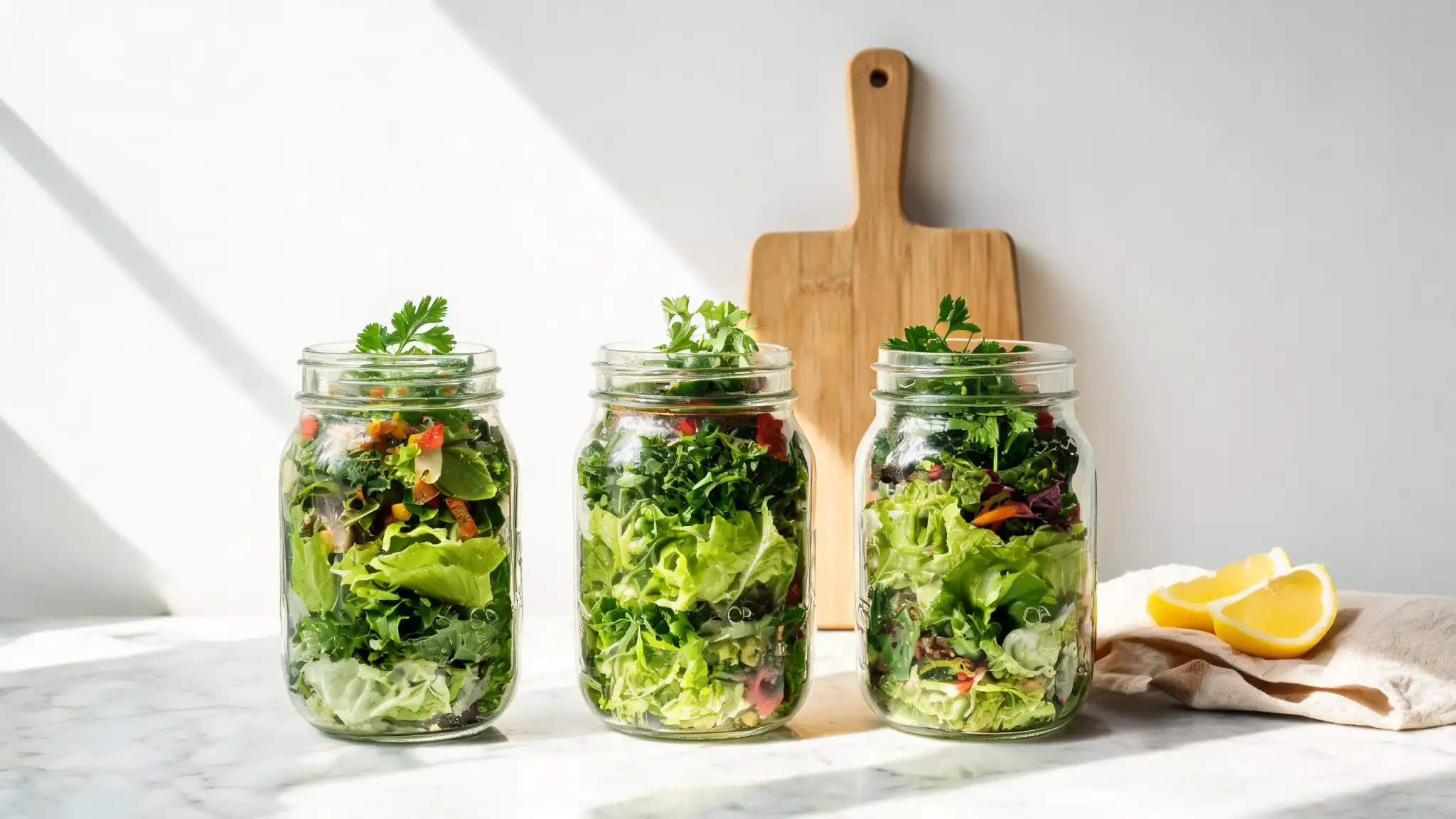
You open the office fridge at noon. The sandwich line is twenty minutes deep. The vending machine hums in the corner. That is the exact moment a mason jar salad earns its keep. It is portable, portioned, and—when layered correctly—crisp from Monday lunch through Friday.
According to the Harvard T.H. Chan School of Public Health meal-prep guide, a busy schedule is one of the top reasons people choose quick takeout meals, which are often calorie-dense and light on vegetables. Mason jar salads solve both problems at once: they turn a grab-and-go lunch into a balanced, produce-forward meal.
Why Mason Jars Beat Plastic Containers
Plastic meal-prep containers are useful, but they have a weakness: wide surface area. Once dressing touches greens, moisture starts breaking down cell walls. Within a day, spinach wilts and lettuce turns limp. A quart mason jar stacks ingredients vertically and seals tightly, so dressing sits at the bottom until you are ready to eat.
The jar also solves the soggy-protein problem. Grains, beans, and cooked chicken stay above the dressing layer, while sturdy vegetables act as a buffer. When you dump the jar into a bowl at lunch, the dressing cascades over the greens last—exactly when it is supposed to.
The Layering Formula That Keeps Greens Crisp
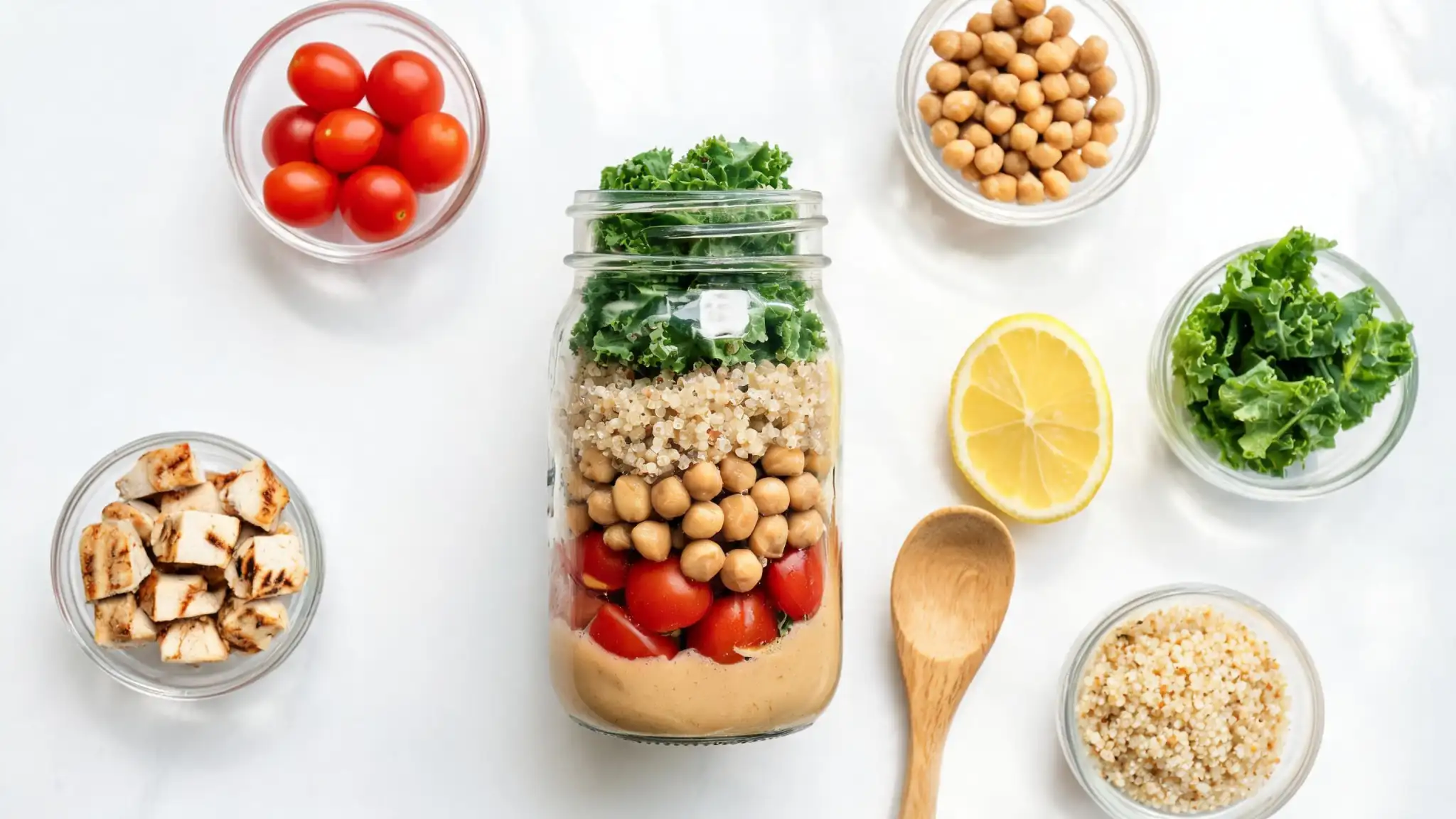
The order is not a stylistic choice; it is a moisture-control strategy. Layer from bottom to top like this:
Dressing — always first. Two tablespoons is enough for a quart jar.
Hard vegetables — carrots, cucumbers, cherry tomatoes, peppers. They can marinate in dressing for days without losing crunch.
Proteins and grains — chicken, beans, quinoa, tofu, eggs. They sit above the wet layer and stay firm.
Soft ingredients — cheese, avocado, fruit, nuts. Add these in small amounts so they do not bruise.
Greens — pack them loosely at the top so air circulates and leaves stay dry.
This structure matches the guidance from Harvard's Healthy Eating Plate, which emphasizes vegetables and fruits as the foundation of a balanced meal. A quart jar can hold roughly two cups of greens plus one cup of vegetables and a half-cup of protein, making it a practical single-portion template.
12 Mason Jar Salad Recipes That Stay Fresh
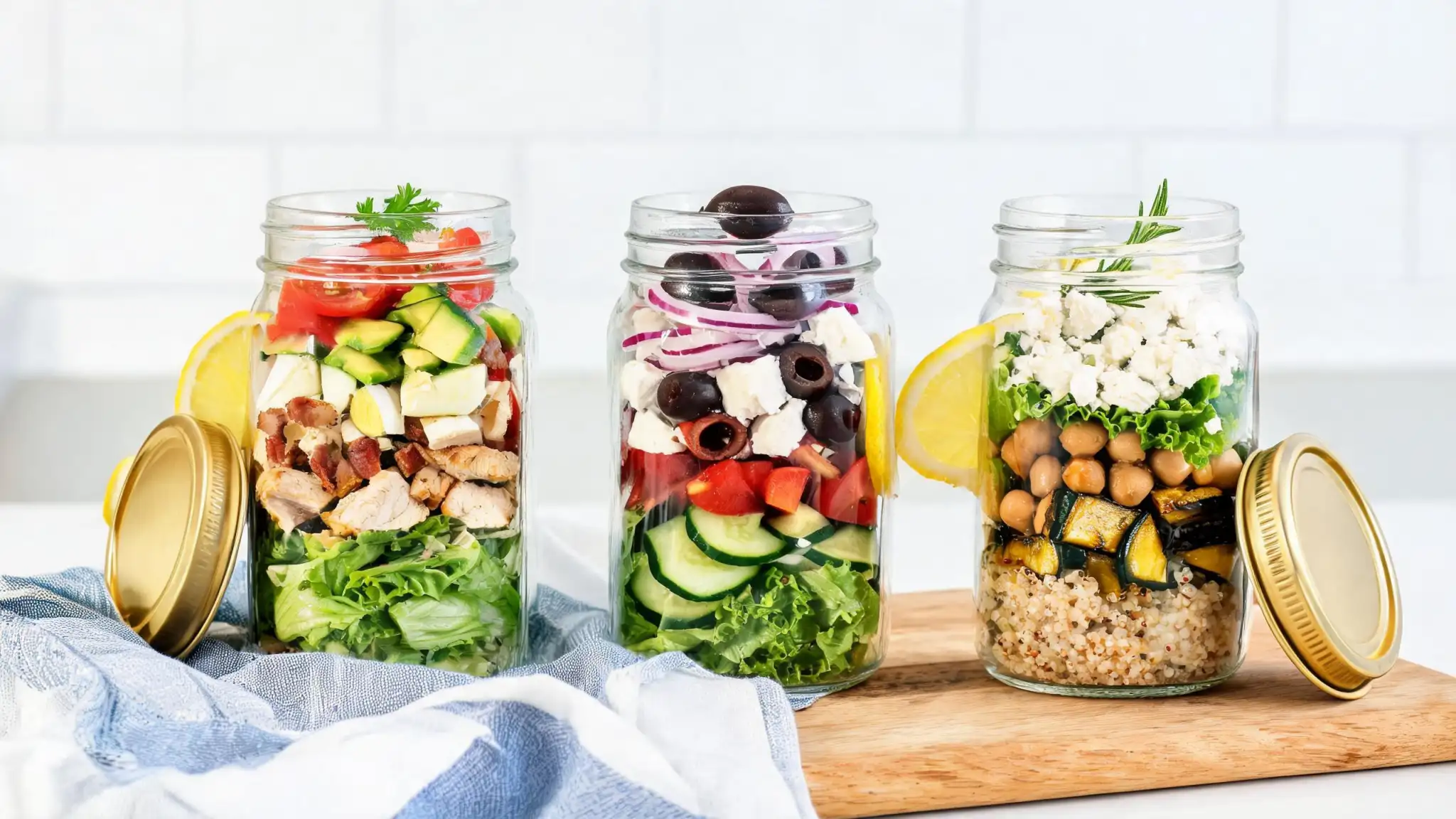
Each recipe below is built for a wide-mouth quart jar and makes one serving. Macros are approximate and depend on the exact brands you use. Prep five jars on Sunday and you have lunch handled for the workweek.
1. Classic Cobb Salad Jar
Dressing: 2 tablespoons red-wine vinaigrette
Layer order:
1/2 cup cherry tomatoes, halved
1/4 cup diced cucumber
1 hard-boiled egg, chopped
1/4 cup corn kernels
1/2 cup diced grilled chicken
1/4 cup shredded cheddar
1/4 avocado, diced
2 cups chopped romaine
Approximate macros: 520 cal · 35 g protein · 28 g fat · 18 g carbs
2. Greek Chicken Salad Jar
Dressing: 2 tablespoons lemon-oregano dressing
Layer order:
1/2 cup diced cucumber
1/2 cup cherry tomatoes
1/4 cup kalamata olives
1/2 cup grilled chicken, diced
1/4 cup crumbled feta
2 cups baby spinach
Approximate macros: 430 cal · 35 g protein · 26 g fat · 12 g carbs
3. Taco Salad Jar
Dressing: 2 tablespoons salsa mixed with lime juice
Layer order:
1/2 cup black beans, rinsed
1/2 cup corn kernels
1/4 cup diced bell pepper
1/2 cup cooked ground turkey or beef
1/4 cup shredded Mexican cheese
2 cups shredded romaine
Pack 1/4 cup crushed tortilla chips separately
Approximate macros: 480 cal · 32 g protein · 22 g fat · 35 g carbs
4. Strawberry Poppyseed Chicken Jar
Dressing: 2 tablespoons poppyseed dressing
Layer order:
1/2 cup sliced strawberries
1/4 cup thinly sliced red onion
1/2 cup grilled chicken, sliced
1/4 cup sliced almonds
1/4 cup crumbled goat cheese
2 cups baby spinach
Approximate macros: 410 cal · 32 g protein · 22 g fat · 14 g carbs
5. Buffalo Chicken Jar
Dressing: 1 tablespoon buffalo sauce + 1 tablespoon ranch dressing
Layer order:
1/2 cup celery, diced
1/2 cup cherry tomatoes
1/2 cup diced cooked chicken
1/4 cup crumbled blue cheese
2 cups chopped romaine
Approximate macros: 390 cal · 34 g protein · 24 g fat · 8 g carbs
6. Mediterranean Chickpea Jar
Dressing: 2 tablespoons tahini-lemon dressing
Layer order:
1/2 cup chickpeas, rinsed
1/2 cup diced cucumber
1/2 cup cherry tomatoes
1/4 cup diced red onion
1/4 cup crumbled feta
2 cups arugula
Approximate macros: 380 cal · 14 g protein · 20 g fat · 36 g carbs
7. Thai Peanut Noodle Jar
Dressing: 2 tablespoons peanut-lime dressing
Layer order:
1/2 cup cooked rice noodles, cooled
1/2 cup shredded carrot
1/2 cup shredded red bell pepper
1/4 cup shelled edamame
1/2 cup shredded chicken or baked tofu
2 cups shredded Napa cabbage
Approximate macros: 460 cal · 28 g protein · 18 g fat · 42 g carbs
8. Italian Antipasto Jar
Dressing: 2 tablespoons balsamic vinaigrette
Layer order:
1/2 cup quartered artichoke hearts
1/2 cup roasted red peppers
1/4 cup sliced olives
1/2 cup sliced turkey pepperoni or salami
1/4 cup mozzarella pearls
2 cups mixed greens
Approximate macros: 470 cal · 26 g protein · 34 g fat · 12 g carbs
9. Southwestern Quinoa Jar
Dressing: 2 tablespoons lime-cilantro dressing
Layer order:
1/2 cup cooked quinoa, cooled
1/2 cup black beans, rinsed
1/2 cup corn kernels
1/4 cup diced bell pepper
1/4 cup shredded cheese
2 cups chopped romaine
Approximate macros: 450 cal · 18 g protein · 18 g fat · 52 g carbs
10. Asian Sesame Tofu Jar
Dressing: 2 tablespoons sesame-ginger dressing
Layer order:
1/2 cup shredded purple cabbage
1/2 cup shredded carrot
1/2 cup shelled edamame
1/2 cup baked tofu, cubed
1/4 cup cashews
2 cups mixed greens
Approximate macros: 430 cal · 20 g protein · 24 g fat · 28 g carbs
11. Turkey Apple Cheddar Jar
Dressing: 2 tablespoons apple-cider vinaigrette
Layer order:
1/2 cup diced apple
1/4 cup dried cranberries
1/2 cup sliced deli turkey
1/4 cup diced cheddar
1/4 cup walnuts
2 cups baby spinach
Approximate macros: 510 cal · 32 g protein · 30 g fat · 22 g carbs
12. Smoked Salmon Dill Jar
Dressing: 2 tablespoons lemon-dill dressing
Layer order:
1/2 cup diced cucumber
1/4 cup thinly sliced red onion
1/2 cup smoked salmon, torn
1 hard-boiled egg, chopped
1 tablespoon capers, drained
2 cups mixed greens
Approximate macros: 420 cal · 30 g protein · 28 g fat · 10 g carbs
Storage, Safety, and Shelf Life
Even the best layering cannot beat time and temperature. According to Michigan State University Extension, most prepared salads and leftovers keep best for three to four days when stored at or below 40°F (4°C). Plan your jar salads on Sunday and eat them by Thursday or Friday for the best texture and flavor.
Keep these safety rules in mind:
Refrigerate immediately after assembly. Do not leave jars on the counter for more than two hours.
Cool grains and proteins first before adding them. Hot quinoa or chicken creates steam inside the jar, which wilts greens.
Use fresh ingredients with the longest use-by dates. Pre-washed greens should still be dry; pat them with a paper towel if needed.
Keep dairy and eggs cold. If a recipe uses cheese or hard-boiled eggs, keep the jar refrigerated until mealtime.
Do not freeze dressed jars. Freezing turns lettuce and cucumber to mush; freeze only the base of grain-and-protein bowls without greens.
How CookGo Helps You Meal Prep Smarter
Mason jar salads are simple in theory, but easy to forget in practice. That is where CookGo comes in. Use the app to save any of these recipes, scale them to your household size, and generate a consolidated shopping list. The built-in meal-planning tools let you assign each jar to a weekday, so you never prep five salads and only eat three.
Because every recipe in this guide is written in standard units, CookGo's ingredient parser can import the amounts directly. No manual typing, no guessing whether you need one can of chickpeas or two. Build your jar-salad rotation once, then rotate recipes week after week without rebuilding the plan from scratch.
Why This Approach Fits Most Eating Plans
The jar format is naturally flexible. Swap chicken for tofu, leave out the cheese, or double the grains depending on your goals. The common thread is volume: two cups of greens plus a cup of vegetables gives you a large, satisfying meal without excess calories. Nutrition.gov and the National Institute of Diabetes and Digestive and Kidney Diseases both emphasize vegetables, lean proteins, and whole grains as the foundation of a balanced eating pattern. These salads check each box in a single container.
Frequently Asked Questions
Do mason jar salads really stay fresh all week?
Yes, when you follow the layering formula and store them at safe refrigerator temperatures. The dressing stays at the bottom, greens stay at the top, and the sealed jar limits airflow. For peak freshness, eat within four days.
What size mason jar should I use?
A wide-mouth quart jar (32 ounces) is the standard size for a single lunch salad. It holds enough greens, vegetables, protein, and dressing for a full meal without overflowing.
Can I use a plastic jar instead of glass?
Yes, but glass mason jars are easier to clean, resist staining, and do not hold odors from strong dressings. They also keep the contents cooler if you transport them in an insulated bag.
Should I shake the jar before eating?
Do not shake it. Shaking bruises the greens and forces dressing through every layer. Instead, turn the jar upside down into a bowl. The dressing will fall last and coat the salad naturally.