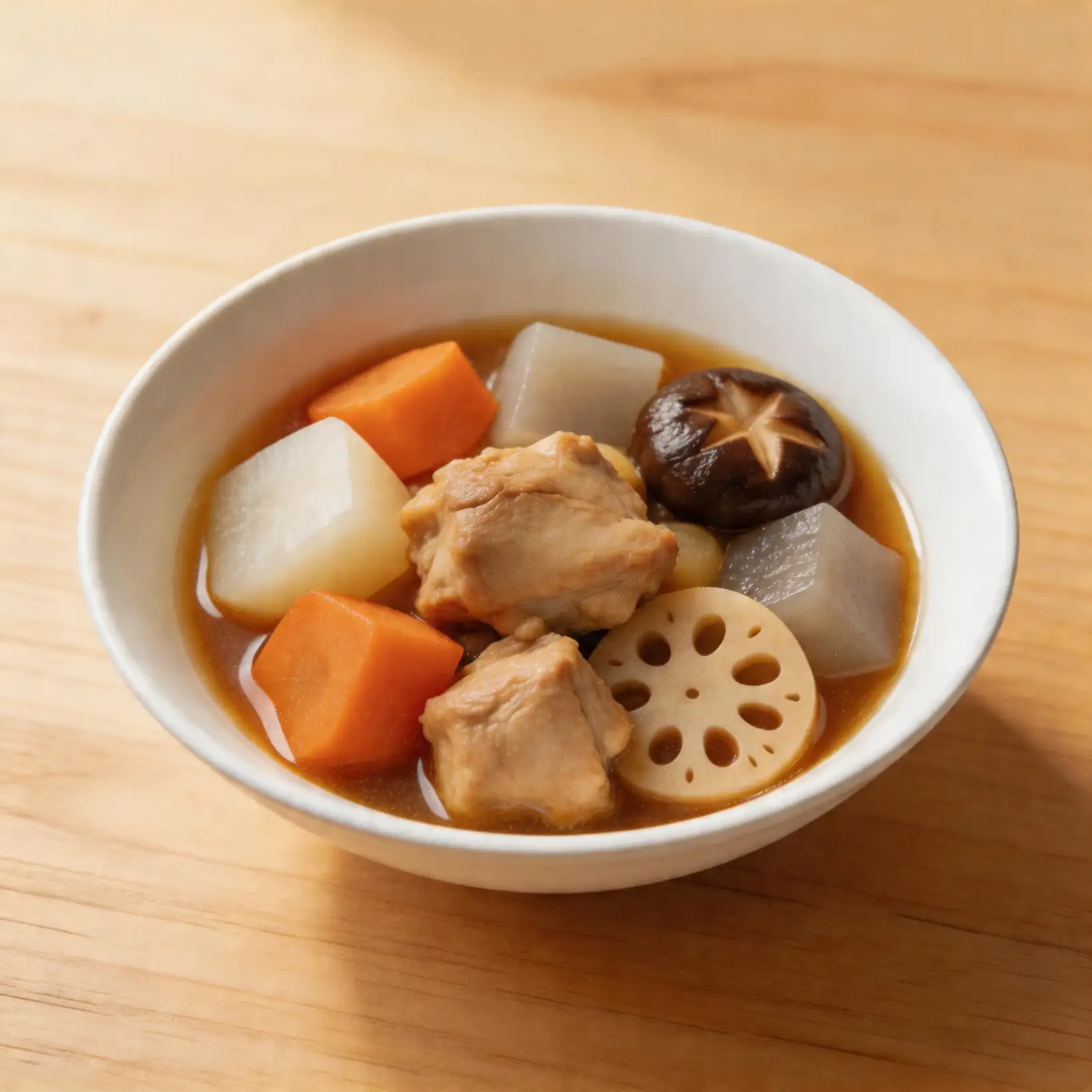
Looking for a comforting, healthy one-pot meal that brings authentic Japanese flavor to your kitchen? This Chikuzenni recipe is the perfect introduction to nimono—the traditional Japanese technique of simmering ingredients in seasoned broth. Packed with tender chicken, colorful root vegetables, and savory-sweet umami flavors, this dish is ideal for weeknight dinners or meal prep.
What Is Chikuzenni?
Chikuzenni (筑前煮) is a classic Japanese simmered dish that originated in the Chikuzen region of Fukuoka Prefecture. According to Wikipedia, this dish traditionally features chicken and a variety of root vegetables slow-cooked in a soy sauce-based broth until every ingredient absorbs the rich umami flavor. It is especially popular during the Japanese New Year (osechi ryori) but is enjoyed year-round as a comforting home-cooked meal.
What makes Chikuzenni special is the drop-lid technique (otoshi-buta), where a lid placed directly on the ingredients helps the broth circulate and evenly season every piece—no stirring required.
Ingredients (Serves 4)
Main Ingredients
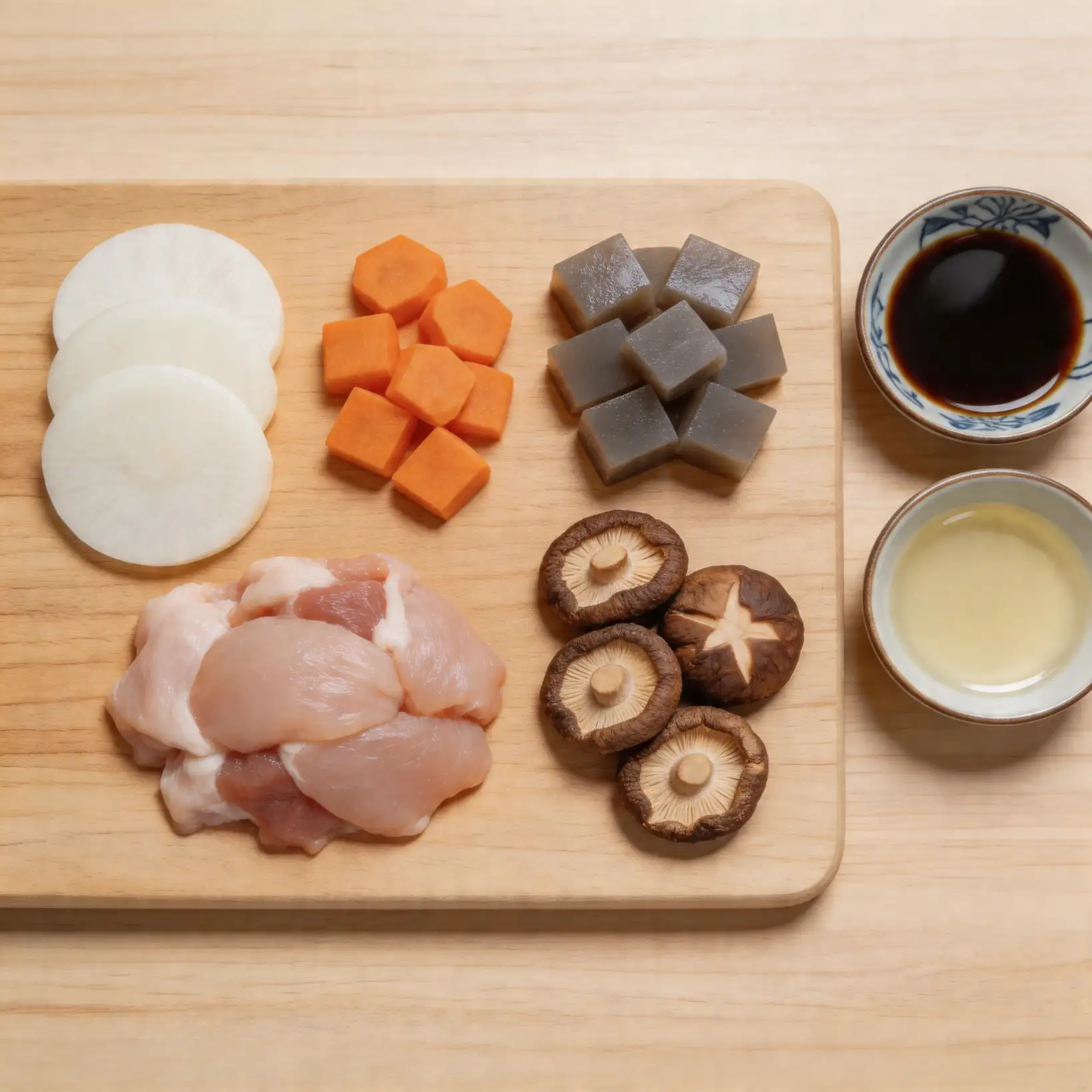
8 oz boneless chicken thigh, cut into bite-sized pieces
1 medium carrot (about 100g), cut into rolling wedges
1 medium potato (about 150g), peeled and cut into chunks
3.5 oz lotus root (renkon), sliced
2 oz burdock root (gobo), shaved into thin strips
4–5 fresh shiitake mushrooms, stems removed
3.5 oz konnyaku (konjac), rinsed and torn into pieces
2 oz bamboo shoots, sliced
Seasonings
2 tbsp soy sauce
2 tbsp mirin
1 tbsp sake
1 tbsp sugar
1.5 cups dashi stock (or chicken broth)
1 tbsp vegetable oil
American Ingredient Substitutions
Can't find Japanese ingredients at your local grocery store? Here are easy swaps available at most American supermarkets:
Original Ingredient | American Substitute | Where to Find |
|---|---|---|
Lotus root (renkon) | Parsnip or turnip | Produce section |
Burdock root (gobo) | Celery root (celeriac) or parsnip | Produce section |
Konnyaku (konjac) | Extra firm tofu or zucchini | Tofu section / Produce |
Shiitake mushrooms | Cremini or baby bella mushrooms | Produce section |
Dashi stock | Chicken broth + 1 tsp soy sauce | Soup aisle |
Mirin | Sweet sherry or 1 tbsp sake + 1 tsp sugar | Asian aisle / Liquor store |
Step-by-Step Instructions
Step 1: Prepare the Ingredients
Cut the chicken into bite-sized pieces. Peel and cut vegetables into uniform chunks so they cook evenly. Rinse konnyaku under hot water and tear into bite-sized pieces. If using lotus root, soak slices in water with a splash of vinegar to prevent browning.
Step 2: Sear the Chicken
Heat 1 tbsp vegetable oil in a large pot or Dutch oven over medium heat. Add chicken pieces and sear until lightly browned on all sides, about 3–4 minutes. This step locks in flavor.
Step 3: Add Root Vegetables
Add carrots, potatoes, lotus root, burdock root, and bamboo shoots to the pot. Stir-fry for 2–3 minutes to coat the vegetables with oil and chicken drippings.
Step 4: Add Broth and Seasonings
Pour in dashi stock, soy sauce, mirin, sake, and sugar. Bring to a gentle boil, then reduce heat to low. Place a drop lid (otoshi-buta) directly on the ingredients—or use a piece of parchment paper cut to fit. This ensures even seasoning without stirring.
Step 5: Simmer
Simmer covered for 30–35 minutes until vegetables are fork-tender. Add shiitake mushrooms and konnyaku during the last 10 minutes of cooking.
Step 6: Rest and Serve
Turn off heat and let the dish rest for 10 minutes. This allows the flavors to fully meld together. Serve warm with steamed rice.
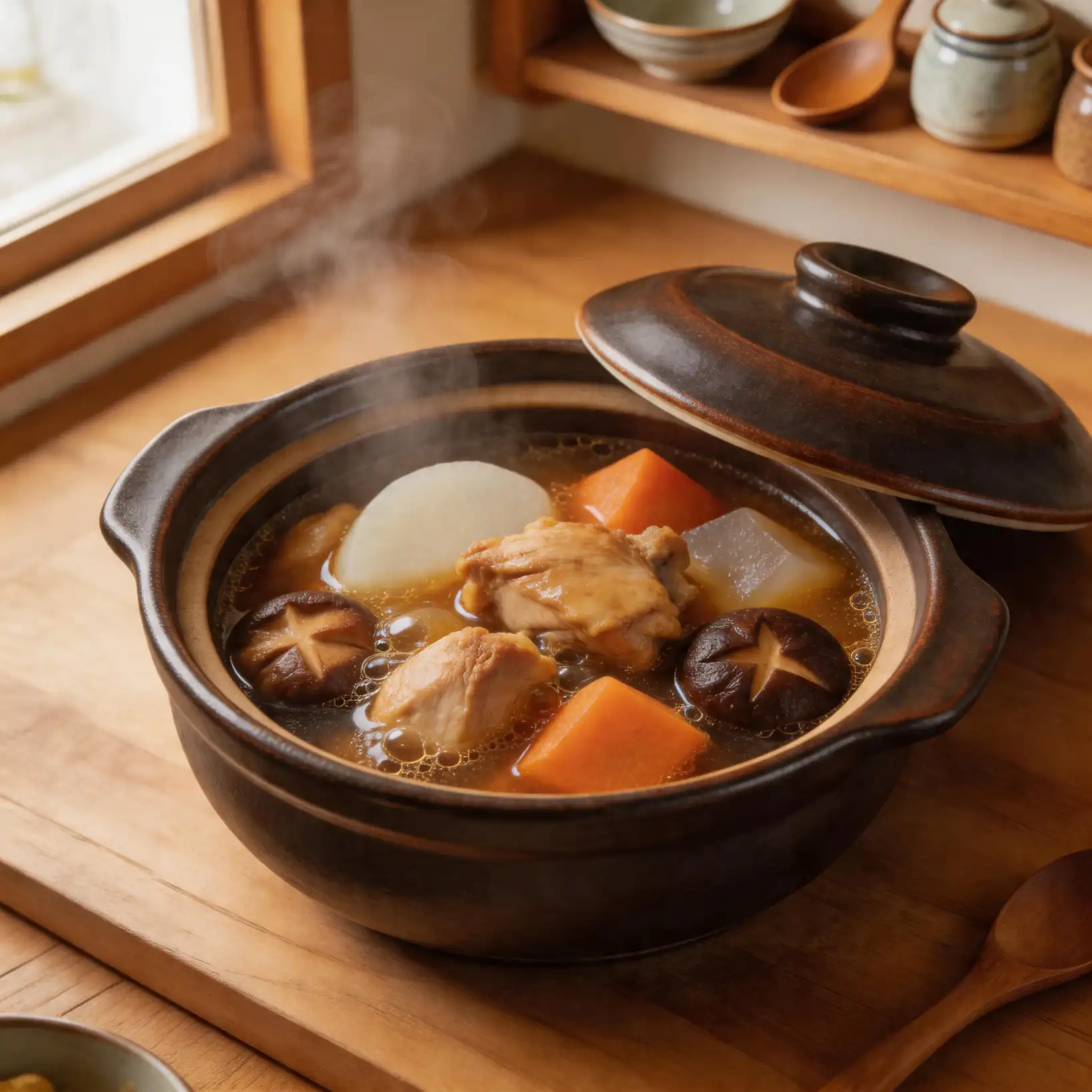
Instant Pot Chikuzenni (Quick Version)
Short on time? This Instant Pot version delivers the same deep flavor in under 30 minutes:
Set Instant Pot to Sauté mode. Heat oil and sear chicken for 3 minutes.
Add all vegetables except shiitake and konnyaku. Stir-fry for 2 minutes.
Add dashi, soy sauce, mirin, sake, and sugar. Stir to combine.
Cancel Sauté. Secure lid and set to Pressure Cook (Manual) on High for 8 minutes.
Quick release pressure. Add shiitake mushrooms and konnyaku.
Switch back to Sauté mode and simmer uncovered for 5–7 minutes to reduce the broth slightly.
Turn off and let rest for 5 minutes before serving.
Rice Cooker Method
You can also make Chikuzenni in a rice cooker with a "steam" or "cook" function:
Sear chicken separately in a pan (optional but recommended).
Place all ingredients in the rice cooker pot. Add seasonings and broth.
Select the regular "Cook" cycle (about 30–40 minutes).
Once finished, let rest for 10 minutes before serving.
Pro Tips for Perfect Chikuzenni
Use a drop lid: This traditional Japanese technique circulates broth evenly. No drop lid? Cut parchment paper to fit inside your pot.
Cut evenly: Keep vegetable pieces roughly the same size for uniform cooking.
Don't stir too much: Simmering gently without stirring helps vegetables keep their shape.
Rest before serving: The 10-minute resting period is essential for flavor development.
Make ahead: Chikuzenni tastes even better the next day as flavors deepen overnight.
Nutrition Information (Per Serving)
Each serving of this Chikuzenni recipe (based on 4 servings) provides approximately:
Nutrient | Amount | % Daily Value* |
|---|---|---|
Calories | ~420 kcal | 21% |
Protein | ~28g | 56% |
Total Fat | ~9g | 12% |
Carbohydrates | ~52g | 19% |
Dietary Fiber | ~7g | 25% |
Sodium | ~680mg | 30% |
Potassium | ~850mg | 18% |
*Percent Daily Values are based on a 2,000-calorie diet. Nutrition data is estimated based on USDA FoodData Central values for carrots (41 kcal/100g), potatoes (77 kcal/100g), chicken breast (120 kcal/100g), and shiitake mushrooms (34 kcal/100g). Actual values may vary depending on exact ingredients and portion sizes.
Why Chikuzenni Is Perfect for American Home Cooks
This dish checks all the boxes for busy American families:
One-pot meal: Minimal cleanup with everything cooked in a single pot.
Meal-prep friendly: Tastes better the next day and keeps well in the fridge for up to 4 days.
Customizable: Use whatever vegetables you have on hand—sweet potatoes, turnips, or daikon all work beautifully.
Budget-friendly: Uses affordable, everyday ingredients with no specialty shopping required.
Nutrient-dense: A balanced meal with lean protein, complex carbs, and fiber-rich vegetables in every bowl.
Love This Recipe? Discover More with CookGo
Looking for more easy Japanese recipes like this one? Download CookGo—your personal AI-powered recipe assistant. Import recipes from any website, get step-by-step cooking guidance, and discover new dishes tailored to your taste. Whether you are craving Japanese home cooking, quick weeknight meals, or meal-prep inspiration, CookGo makes cooking simple and fun.
Frequently Asked Questions (FAQ)
What does Chikuzenni taste like?
Chikuzenni has a savory-sweet flavor profile with deep umami from soy sauce and dashi. The vegetables absorb the seasoned broth during simmering, resulting in a comforting, mildly sweet taste that pairs perfectly with steamed rice.
Can I make Chikuzenni vegetarian?
Absolutely! Simply omit the chicken and use vegetable dashi or mushroom broth instead of chicken broth. Add extra firm tofu or more mushrooms for protein.
How long does Chikuzenni last in the fridge?
Stored in an airtight container, Chikuzenni keeps well in the refrigerator for up to 4 days. In fact, many Japanese home cooks believe it tastes better the day after as the flavors continue to develop.
Can I freeze Chikuzenni?
Yes, Chikuzenni freezes well for up to 1 month. Allow it to cool completely before transferring to freezer-safe containers. Thaw overnight in the refrigerator and reheat gently on the stovetop.
What is the difference between Chikuzenni and Nikujaga?
While both are Japanese simmered dishes, Chikuzenni features a wider variety of root vegetables including lotus root, burdock, and konnyaku, while Nikujaga is simpler, focusing mainly on potatoes, onions, and thinly sliced beef in a sweeter broth.
Do I need a drop lid (otoshi-buta)?
A drop lid is traditional but not essential. You can make one by cutting a piece of parchment paper to fit inside your pot, or simply use a regular lid. The key is keeping the ingredients submerged in broth for even seasoning.
Where can I buy lotus root and burdock in the US?
Fresh lotus root and burdock can be found at Asian grocery stores like H Mart, 99 Ranch Market, or Mitsuwa. Frozen pre-sliced lotus root is also widely available in the freezer section of Asian supermarkets. Alternatively, use parsnips or turnips as substitutes.