Easter is a time for celebration, family gatherings, and of course, delicious food. But indulging in holiday favorites doesn't have to derail your health goals. With CookGo App, you can easily track calories and plan balanced meals that satisfy both your taste buds and your wellness journey.
Why Healthy Easter Eating Matters
The average Easter dinner can pack over 3,000 calories—nearly double the recommended daily intake for most adults. Traditional dishes like honey-glazed ham, creamy scalloped potatoes, and rich desserts contribute to this calorie overload. However, with some smart substitutions and mindful cooking techniques, you can create an Easter feast that's both delicious and nutritious.
According to the Harvard T.H. Chan School of Public Health, balanced holiday meals should emphasize vegetables, lean proteins, and whole grains while limiting processed foods and added sugars. This approach allows you to enjoy the celebration without the post-meal food coma.
4 Healthy Easter Recipes with Complete Calorie Counts
These recipes have been developed by our nutrition team to deliver maximum flavor with mindful calorie content. Each recipe serves 4 people and includes complete nutritional breakdowns.
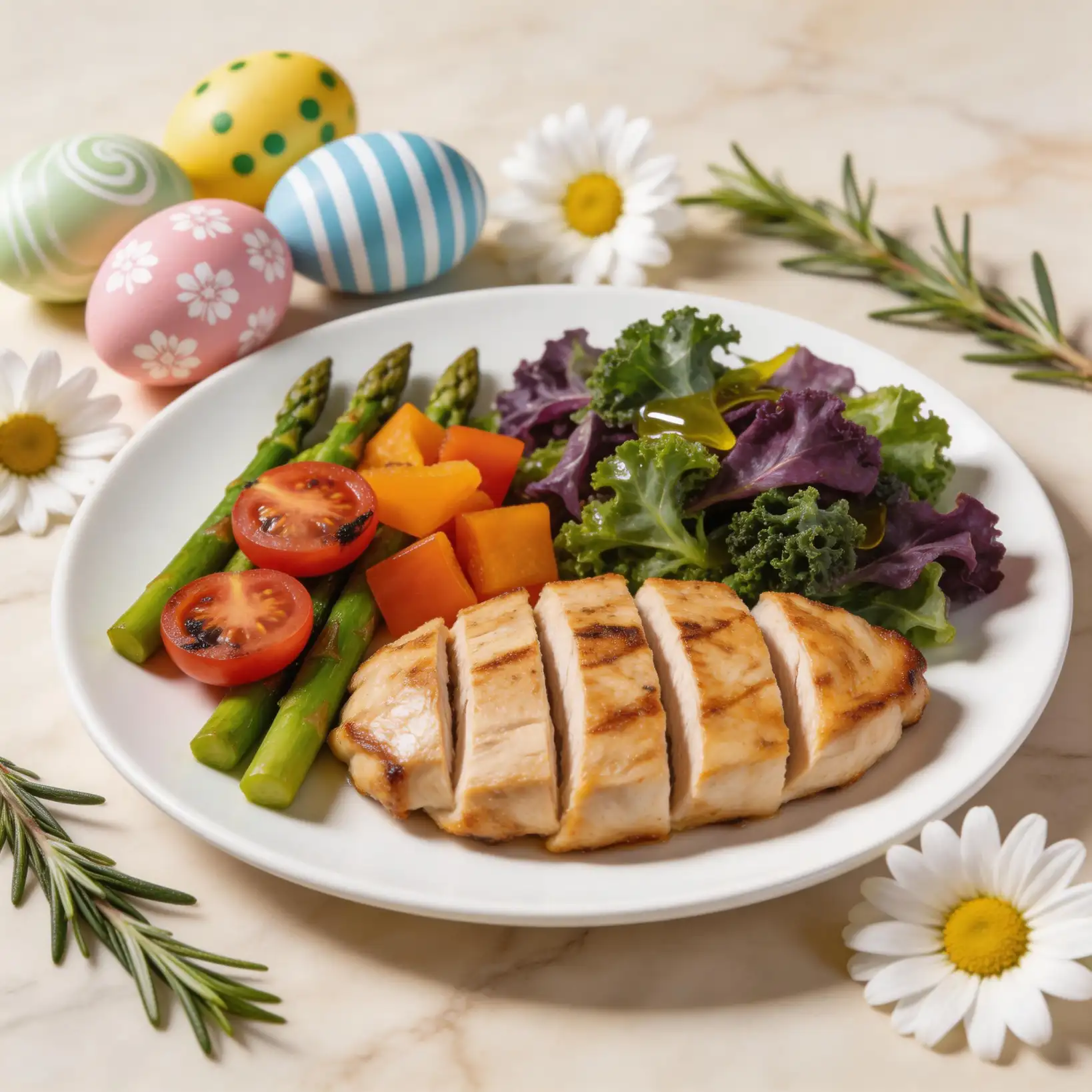
Recipe 1: Herb-Crusted Rack of Lamb with Spring Vegetables (485 calories per serving)
This elegant main course replaces heavy marinades with a fresh herb crust, significantly reducing calories while enhancing flavor.
Ingredients:
1 rack of lamb (8 ribs), trimmed of excess fat
2 tbsp fresh rosemary, minced
2 tbsp fresh thyme, minced
3 cloves garlic, minced
1 tbsp Dijon mustard
1 tbsp olive oil
2 cups baby carrots
1 lb asparagus spears
1 cup cherry tomatoes
Salt and pepper to taste
Instructions:
Preheat oven to 400°F (200°C).
Mix herbs, garlic, mustard, and olive oil into a paste.
Season lamb with salt and pepper, then coat with herb mixture.
Roast lamb for 20-25 minutes for medium-rare.
Toss vegetables with remaining oil and roast alongside lamb for 15 minutes.
Nutrition per serving: 485 calories, 38g protein, 12g carbs, 32g fat, 4g fiber
Data source: USDA FoodData Central
Recipe 2: Lemon Herb Roasted Salmon with Quinoa Pilaf (420 calories per serving)
Salmon provides heart-healthy omega-3 fatty acids, while quinoa delivers complete protein and fiber to keep you satisfied.
Ingredients:
4 salmon fillets (5 oz each)
2 lemons (1 sliced, 1 juiced)
2 tbsp fresh dill, chopped
1 cup quinoa, rinsed
2 cups low-sodium vegetable broth
1/2 cup diced cucumber
1/4 cup red onion, diced
1 tbsp extra virgin olive oil
Instructions:
Cook quinoa in broth according to package directions.
Place salmon on a baking sheet lined with parchment paper.
Top with lemon slices and dill, season with salt and pepper.
Bake at 375°F for 12-15 minutes until flaky.
Fluff quinoa and mix with cucumber, onion, lemon juice, and olive oil.
Nutrition per serving: 420 calories, 35g protein, 28g carbs, 18g fat, 4g fiber
Recipe 3: Greek Yogurt Deviled Eggs (95 calories per serving - 2 halves)
A lighter twist on the classic appetizer, swapping mayonnaise for protein-rich Greek yogurt.
Ingredients:
6 large eggs, hard-boiled and peeled
1/4 cup plain Greek yogurt (non-fat)
1 tsp Dijon mustard
1/2 tsp paprika
1 tbsp fresh chives, chopped
Salt and pepper to taste
Instructions:
Halve eggs lengthwise and carefully remove yolks.
Mash yolks with yogurt, mustard, salt, and pepper until smooth.
Pipe or spoon mixture back into egg whites.
Garnish with paprika and chives.
Nutrition per serving (2 halves): 95 calories, 8g protein, 2g carbs, 6g fat, 0g fiber
Recipe 4: Spring Asparagus and Strawberry Salad with Balsamic Glaze (180 calories per serving)
This vibrant salad captures the essence of spring with fresh, seasonal ingredients and a light balsamic reduction.
Ingredients:
1 lb asparagus, trimmed and blanched
2 cups fresh strawberries, sliced
4 cups mixed spring greens
1/4 cup toasted almonds, sliced
2 oz goat cheese, crumbled
3 tbsp balsamic glaze
1 tbsp extra virgin olive oil
Instructions:
Blanch asparagus in boiling water for 2 minutes, then shock in ice water.
Arrange spring greens on a serving platter.
Top with asparagus, strawberries, almonds, and goat cheese.
Drizzle with balsamic glaze and olive oil before serving.
Nutrition per serving: 180 calories, 6g protein, 18g carbs, 10g fat, 5g fiber
Balancing Flavor and Health: Expert Tips
Creating a healthy Easter menu doesn't mean sacrificing taste. Here are strategies from our nutrition experts to maximize flavor while minimizing unnecessary calories:
1. Embrace Herb and Citrus Flavors
Fresh herbs, lemon, lime, and vinegar add depth and brightness without calories. A squeeze of fresh lemon can transform roasted vegetables, while herbs like rosemary and thyme add sophistication to lean proteins.
2. Choose Cooking Methods Wisely
Roasting, grilling, and steaming preserve nutrients while requiring minimal added fat. A study published in the Journal of Food Science found that roasting vegetables actually increases the bioavailability of certain antioxidants.
3. Practice Portion Awareness
Use smaller plates and serve proteins the size of your palm, carbohydrates the size of your fist, and fats the size of your thumb. This simple visual guide helps maintain appropriate portions without measuring.
4. Prioritize Protein and Fiber
Starting your meal with protein and fiber-rich foods helps regulate blood sugar and promotes satiety. Our recipes average 25-35g of protein per serving, helping you feel satisfied with fewer calories.
Frequently Asked Questions About Healthy Easter Eating
How many calories should an Easter dinner contain?
A balanced Easter dinner should range between 600-800 calories, depending on your daily caloric needs. Our complete menu of herb-crusted lamb, quinoa pilaf, deviled eggs, and spring salad totals approximately 750 calories—leaving room for a small dessert if desired.
Can I make these recipes ahead of time?
Yes! The Greek yogurt deviled eggs can be prepared up to 24 hours in advance and stored covered in the refrigerator. The spring salad components can be prepped separately (wash greens, slice strawberries, blanch asparagus) and assembled just before serving. The salmon is best cooked fresh but can be seasoned up to 4 hours ahead.
Are these recipes suitable for dietary restrictions?
These recipes accommodate several dietary needs: - Gluten-free: All recipes are naturally gluten-free - Low-carb: The lamb and salmon mains are keto-friendly - Dairy-free: Substitute coconut yogurt for Greek yogurt in deviled eggs, omit goat cheese from salad - Nut-free: Replace almonds in salad with sunflower seeds
How can I track these recipes in my meal plan?
Download the CookGo App to easily import these recipes, track calories, and plan your entire Easter menu. Our app provides detailed macro breakdowns and allows you to adjust portions based on your personal nutrition goals.
What's the best way to handle Easter candy and treats?
Moderation is key. Allow yourself a small portion of your favorite treat (100-150 calories) and savor it mindfully. Consider healthier alternatives like dark chocolate-covered strawberries or homemade fruit sorbet to satisfy your sweet tooth with added nutritional benefits.
Conclusion: A Healthier Easter Celebration
Celebrating Easter with healthy, delicious food is entirely achievable. By focusing on fresh, seasonal ingredients, lean proteins, and mindful cooking techniques, you can create a memorable feast that aligns with your wellness goals. These recipes prove that healthy eating never has to mean compromising on flavor or tradition.
Ready to plan your perfect Easter menu? Download CookGo App today and access hundreds of seasonal recipes with complete nutrition information, meal planning tools, and personalized recommendations for your dietary needs.
Written by the CookGo Editorial Team. Nutritional data verified against USDA FoodData Central and peer-reviewed dietary guidelines.