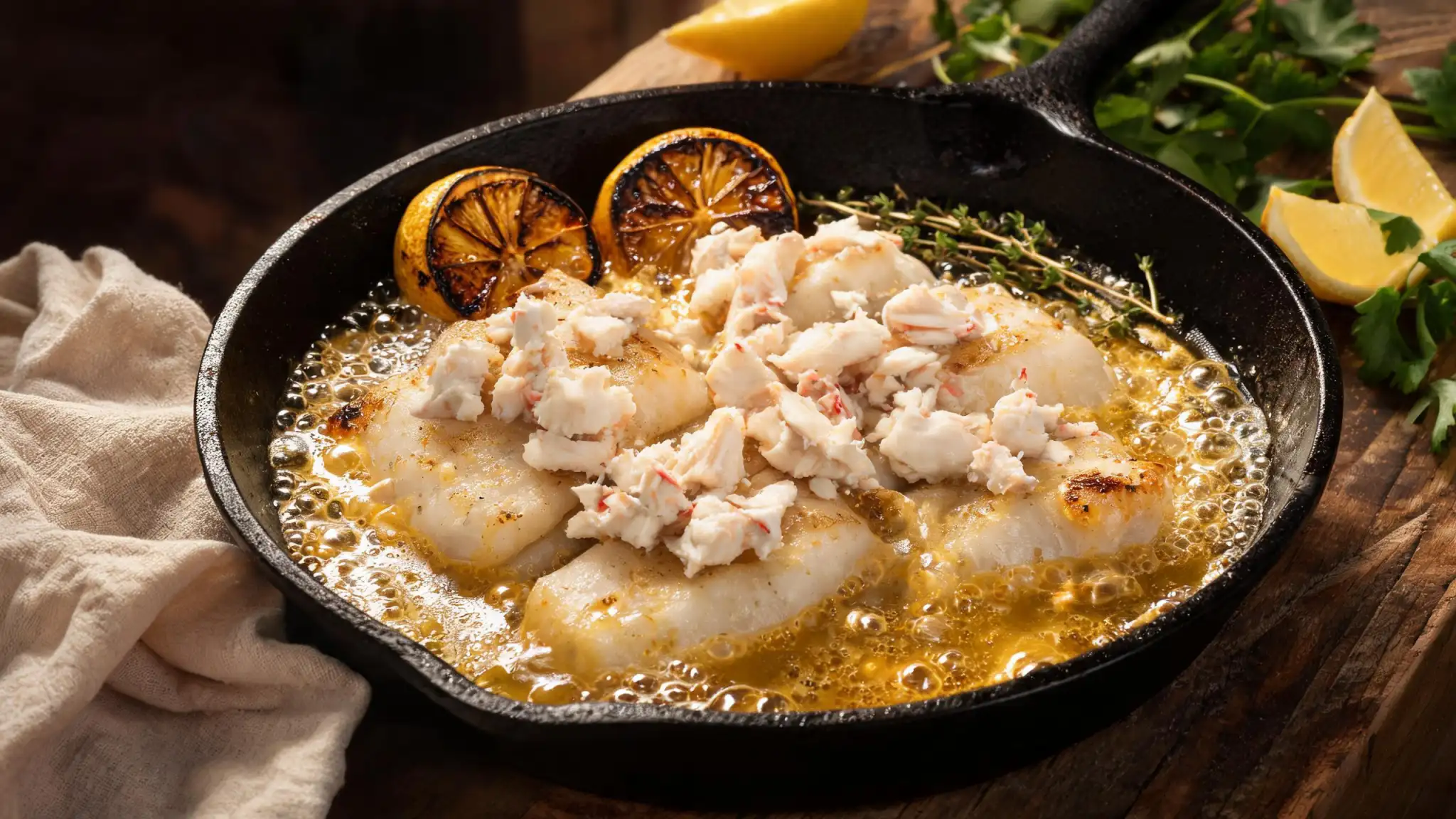
Garlic butter and seafood are a match made in weeknight heaven—and this one-pan cod and crab skillet proves it in 20 minutes flat. Tender cod fillets, sweet lump crab, and a lemon-garlic butter sauce come together in a single pan, which means dinner is fast and cleanup is minimal. It's the kind of restaurant-looking meal that's actually easier than takeout.
Love fast seafood dinners? Save this recipe and let the CookGo app turn your recipe photos into organized meal plans—shopping list included.
Why Cod + Crab Works So Well in One Pan
Cod is one of the most popular white fish for weeknight cooking—light, flaky, and mild enough to take on any flavor. In fact, BBC Good Food's cod recipe collection features dozens of reader-rated cod dishes, from quick skillet meals to hearty stews, which shows just how versatile this fish is. Pairing it with sweet crab meat upgrades a humble fillet into something that feels special, without extra pans or complicated technique.
Skillet-style crab dishes are a proven crowd-pleaser too: Delish's roundup of the best crab recipes leads with party-friendly skillet and dip formats. This recipe borrows that same "crab as the star" energy and channels it into a fast, protein-packed weeknight main.
Cod 101: Choosing, Thawing, and Prepping for the Perfect Sear
Because cod carries this whole dish, spending two extra minutes on prep pays off on the plate.
Choosing cod fillets
Look for fillets that are translucent, moist, and spring back when pressed. Avoid pieces with a strong fishy smell or a yellowish tint—both are signs of age. If you can choose, go for center-cut fillets: they're an even thickness, so they cook evenly and hold together when you flip them. Thin tail pieces cook faster but tend to fall apart, so save those for soups or fish tacos.
Thawing frozen cod the right way
Frozen cod is a perfectly good choice—most "fresh" cod at the counter was frozen at sea anyway. The key is how you thaw it. The best method is overnight in the fridge. In a hurry? Seal the fillets in a zip-top bag, press out the air, and submerge them in a bowl of cold water for 20–30 minutes. Never thaw on the counter (uneven, unsafe) or in the microwave (it starts cooking the edges).
Why patting dry matters so much
Wet fish steams instead of sears. Water on the surface has to evaporate before browning can start, which means gray, rubbery fish instead of a golden crust. Pat both sides dry with paper towels right before seasoning—and again after thawing, since thawed fish releases extra moisture.
Why cod flakes (and when that's good)
Cod's muscle fibers separate into large, juicy flakes when the protein is fully cooked—that's the signature texture, and it's what makes it so good at soaking up sauce. The trick is timing: pull it the moment it turns opaque and flakes easily with a fork. Overcook it by even a minute or two and those same fibers tighten up, squeezing out moisture and turning the fish dry and chalky.
Crab Meat Grades: What to Buy and How to Save Money
Crab meat isn't one-size-fits-all. Here's a quick guide to the common grades you'll see at the store, plus budget-friendly swaps.
Grade | What it is | Best for | Price |
|---|---|---|---|
Jumbo lump | Whole chunks from the swimmer fins | Crab cakes, showcasing crab | $$$$ |
Lump | Large broken pieces from the body | This skillet, salads, pasta | $$$ |
Backfin | Smaller flakes and broken lump | Dips, soups, stuffings | $$ |
Claw meat | Darker, shreddier meat from claws | Bold sauces, gumbo | $ |
For this skillet, lump or backfin is the sweet spot—the pieces are big enough to feel luxurious, but they're getting warmed in butter sauce anyway, so you don't need to splurge on jumbo lump. Canned crab is completely fine; just drain it well and pick out any bits of shell. On a tight budget? Swap in chopped cooked shrimp or bay scallops—they cook in the same 2 minutes and keep the dish feeling special.
The Garlic Butter Technique, Step by Step
This recipe is really a lesson in three small techniques. Master them once and they'll level up every seafood dinner you make.
1. Foaming the butter. Melt the butter over medium heat until it stops foaming and the milk solids at the bottom turn light golden. That's when it smells nutty and sweet (think: light beurre noisette). Butter that's too cool won't carry flavor; butter that's too hot burns.
2. Blooming the garlic. Add minced garlic to the melted butter and cook just 30 seconds, stirring constantly, until it's fragrant. Garlic goes from golden to bitter in under a minute, and burnt garlic will dominate the whole pan. If you like heat, add the red pepper flakes here so they bloom in the fat too.
3. Deglazing with lemon. A squeeze of lemon juice into the hot butter lifts the browned bits off the pan and turns them into sauce. The acid also brightens the richness of the butter and keeps the crab tasting sweet, not heavy. Do this off the heat if your pan runs hot.
Ingredients (Serves 3–4)
Ingredient | Amount |
|---|---|
Cod fillets | 1.5 lb (about 4 fillets) |
Lump crab meat, drained | 8 oz |
Unsalted butter | 4 tbsp |
Garlic, minced | 4 cloves |
Lemon juice | 2 tbsp |
Fresh parsley, chopped | 2 tbsp |
Smoked paprika | 1 tsp |
Kosher salt and black pepper | to taste |
Olive oil | 1 tbsp |
Red pepper flakes (optional) | 1/4 tsp |
Instructions
Prep the cod. Pat the fillets completely dry, then season both sides with salt, pepper, and smoked paprika.
Sear. Heat olive oil in a large skillet over medium-high heat until it shimmers. Add cod and sear 3–4 minutes per side, until golden and just opaque. Transfer to a plate.
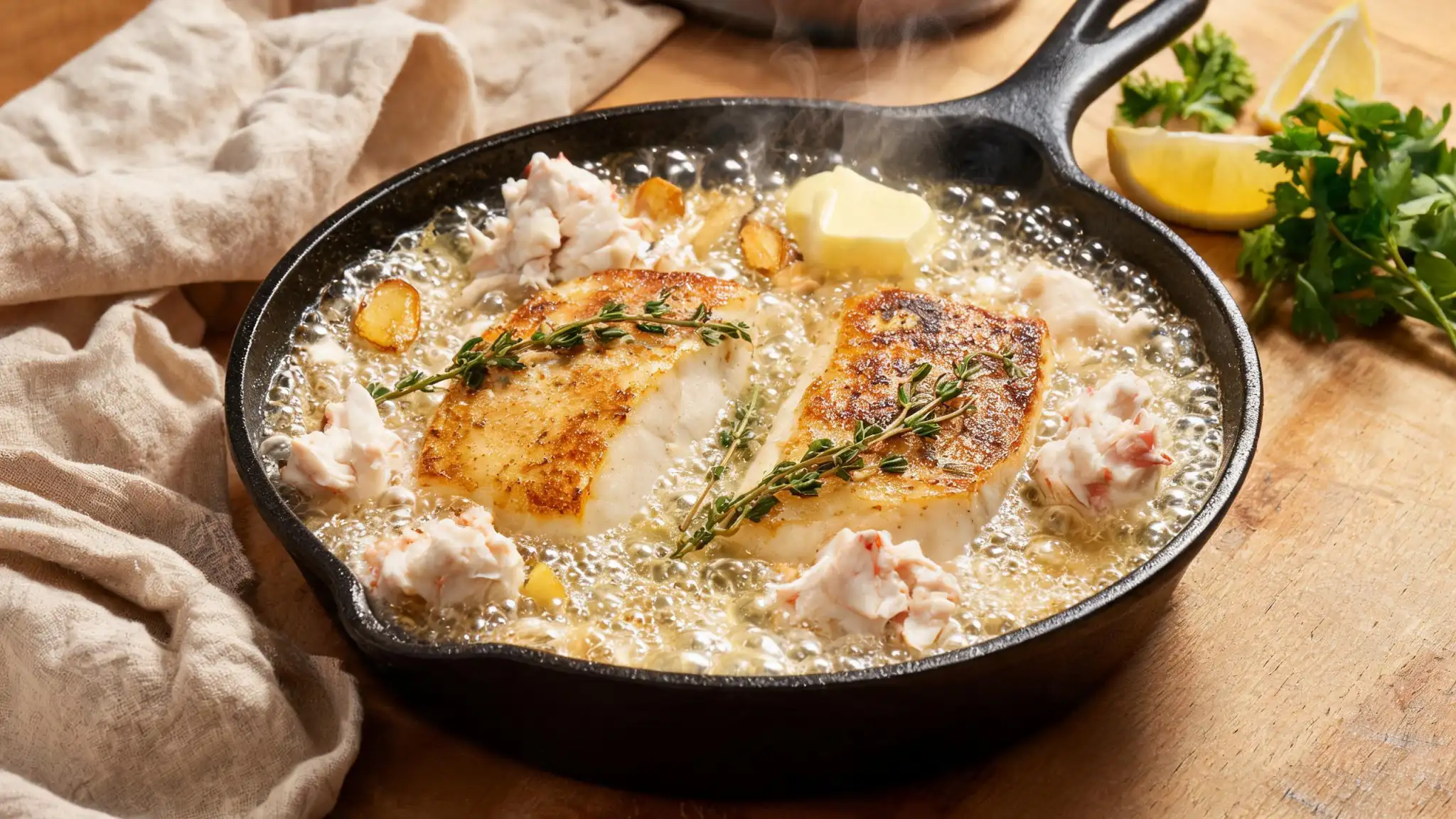
Build the sauce. In the same pan, melt the butter over medium heat. Add garlic (and red pepper flakes, if using) and cook 30 seconds until fragrant. Stir in lemon juice, scraping up any browned bits.
Add the crab. Return the cod to the pan, nestling it into the sauce. Scatter crab meat over the top, spoon sauce over everything, and cook 2 more minutes to warm the crab through.
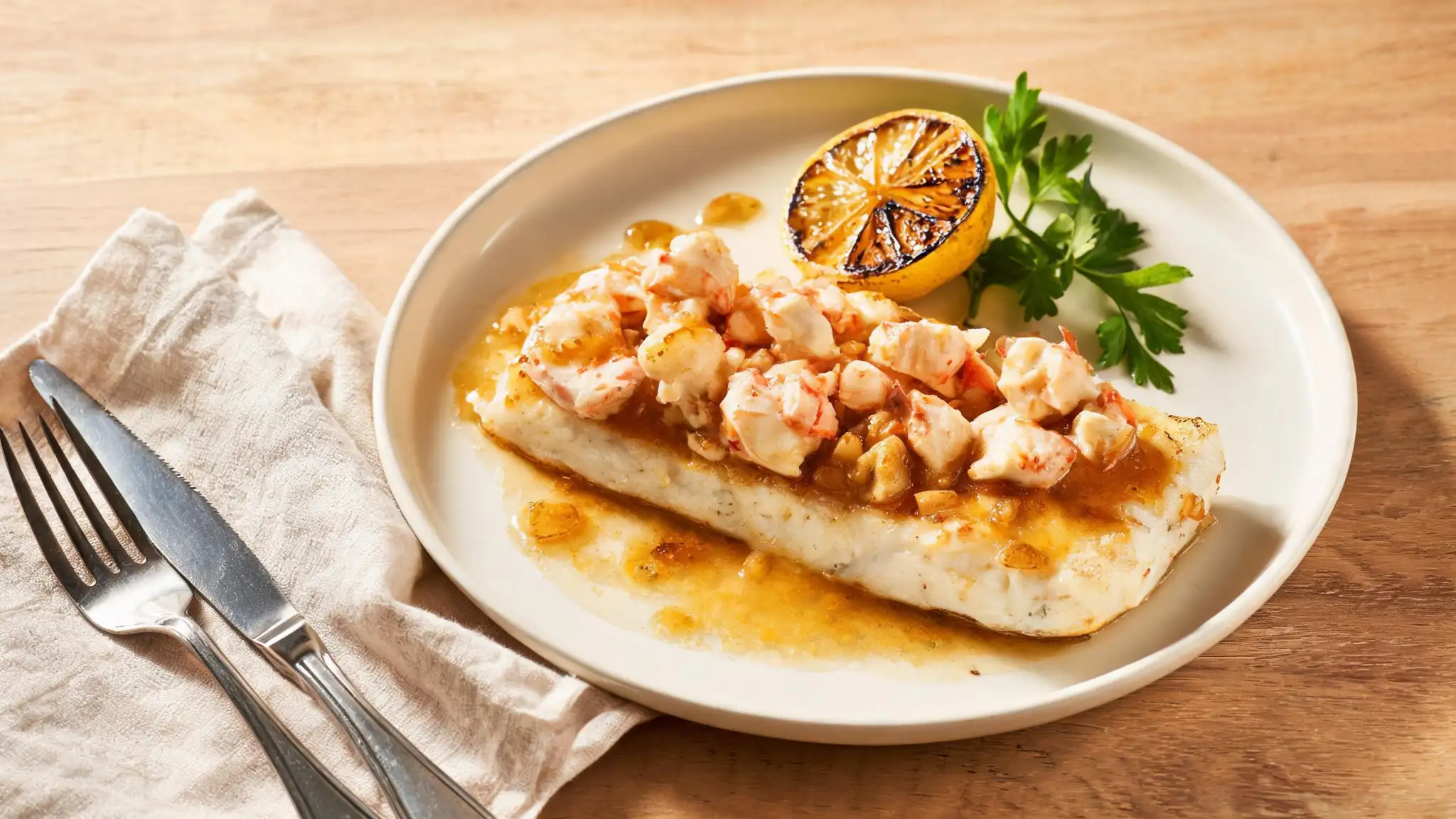
Finish. Shower with fresh parsley and serve straight from the skillet with crusty bread or rice.
3 Ways to Serve It (and What to Pair It With)
The sauce is the best part—choose a side that helps you soak up every drop.
1. Crusty bread. A warm baguette or sourdough is the classic move. Tear, don't slice: ragged edges grab more sauce. This is the fastest option and turns the skillet into a shareable centerpiece.
2. Steamed rice. Fluffy white or jasmine rice soaks up the garlic butter beautifully and stretches the dish to feed four comfortably. For extra flavor, stir chopped parsley into the rice or serve it as lemon-herb rice.
3. Roasted or sautéed vegetables. Asparagus, green beans, zucchini, or blistered cherry tomatoes add color and balance the richness. If your oven is already on, a sheet pan of broccoli at 425°F for 15 minutes is a zero-extra-effort side.
Common Mistakes (and How to Fix Them)
Mistake 1: A watery pan. This almost always means the cod went in wet or frozen. Fix: pat the fish bone-dry and thaw it fully first. If your sauce still looks thin, let it bubble for an extra minute before adding the crab—the butter will tighten as it reduces.
Mistake 2: Overcooked, dry cod. Cod keeps cooking after you take the pan off the heat. Pull it when the center is just opaque—carryover heat will finish it. If you've already gone too far, loosen the sauce with a splash of warm water or extra lemon juice to rehydrate the fish.
Mistake 3: Bitter, burned garlic. Once garlic burns, there's no saving the sauce—start that step over with fresh butter. Prevention: keep the heat at medium, have your lemon juice measured and ready before the garlic hits the pan, and never walk away.
Mistake 4: Mushy crab. Crab is already cooked when you buy it. Two minutes in the sauce is all it needs; any longer and the delicate lumps break down into strings.
Meal-Prep & Leftovers
Make-ahead: You can portion and season the cod (with the paprika, salt, and pepper) up to 24 hours ahead—keep it covered in the fridge and pat dry again before cooking. The garlic can be minced and the parsley chopped a day ahead too, which turns this into a true 15-minute dinner.
Storing leftovers: Refrigerate in an airtight container within 2 hours and eat within 2 days—cooked fish doesn't keep long, and the crab is even more delicate. The butter sauce will firm up in the fridge; that's normal.
Reheating: Warm leftovers gently in a skillet over low heat with a splash of water to loosen the sauce. Avoid the microwave, which overcooks the cod in seconds. Honestly, flaked cold over a salad the next day is delicious too.
Freezing: Not recommended. Both cod and crab turn watery and grainy after freezing in sauce.
3 Tips for a Perfect Skillet
1. Dry fish = golden fish. Moisture is the enemy of a good sear. Pat the cod dry with paper towels right before it hits the pan.
2. Don't overcook the crab. Crab meat is already cooked when you buy it—it's just there to get warm and soak up that garlic butter. Two minutes is plenty.
3. It's a naturally lean, protein-rich dinner. According to the FDA's advice on eating fish, cod is a lean protein choice that's low in mercury, making this skillet a weeknight win you can feel good about.
Frequently Asked Questions
Can I use frozen cod for this skillet recipe?
Yes, but thaw it completely and pat it very dry first. Excess moisture prevents a good sear and waters down the garlic butter sauce. Quick thaw: seal the fillets in a bag and submerge in cold water for 20-30 minutes.
What can I substitute for crab meat?
Canned lump crab works perfectly and keeps this budget-friendly. You can also swap in chopped cooked shrimp or bay scallops—add them in the last 2 minutes so they don't overcook.
How do I keep the cod from falling apart in the pan?
Use a hot pan, dry fillets, and don't move them for the first 3 minutes. Flip once, gently, with a wide spatula. Thick center-cut fillets hold together much better than thin tail pieces.
Can I make this dish dairy-free?
Yes. Swap the butter for a good plant-based butter (one that browns, not a watery spread), or use a 50/50 mix of olive oil and a spoonful of coconut cream for richness. The technique stays the same, and lemon juice keeps the sauce bright.
How long do leftovers keep, and how should I reheat them?
Store leftovers in an airtight container in the fridge and eat them within 2 days. Reheat gently in a skillet over low heat with a splash of water to loosen the sauce—the microwave tends to overcook the cod. The butter sauce will firm up when cold and melt back into a sauce as it warms.
Ready in 20: Your New Weeknight Showpiece
One pan, 20 minutes, and a dinner that tastes like a coastal restaurant—this garlic butter cod and crab skillet earns a permanent spot in the rotation. With the right cod prep, a smart crab grade, and a well-built garlic butter sauce, it's practically foolproof. Save it now and plan your week of quick seafood dinners with the CookGo app.
Download CookGo on Google Play / Download CookGo on the App Store