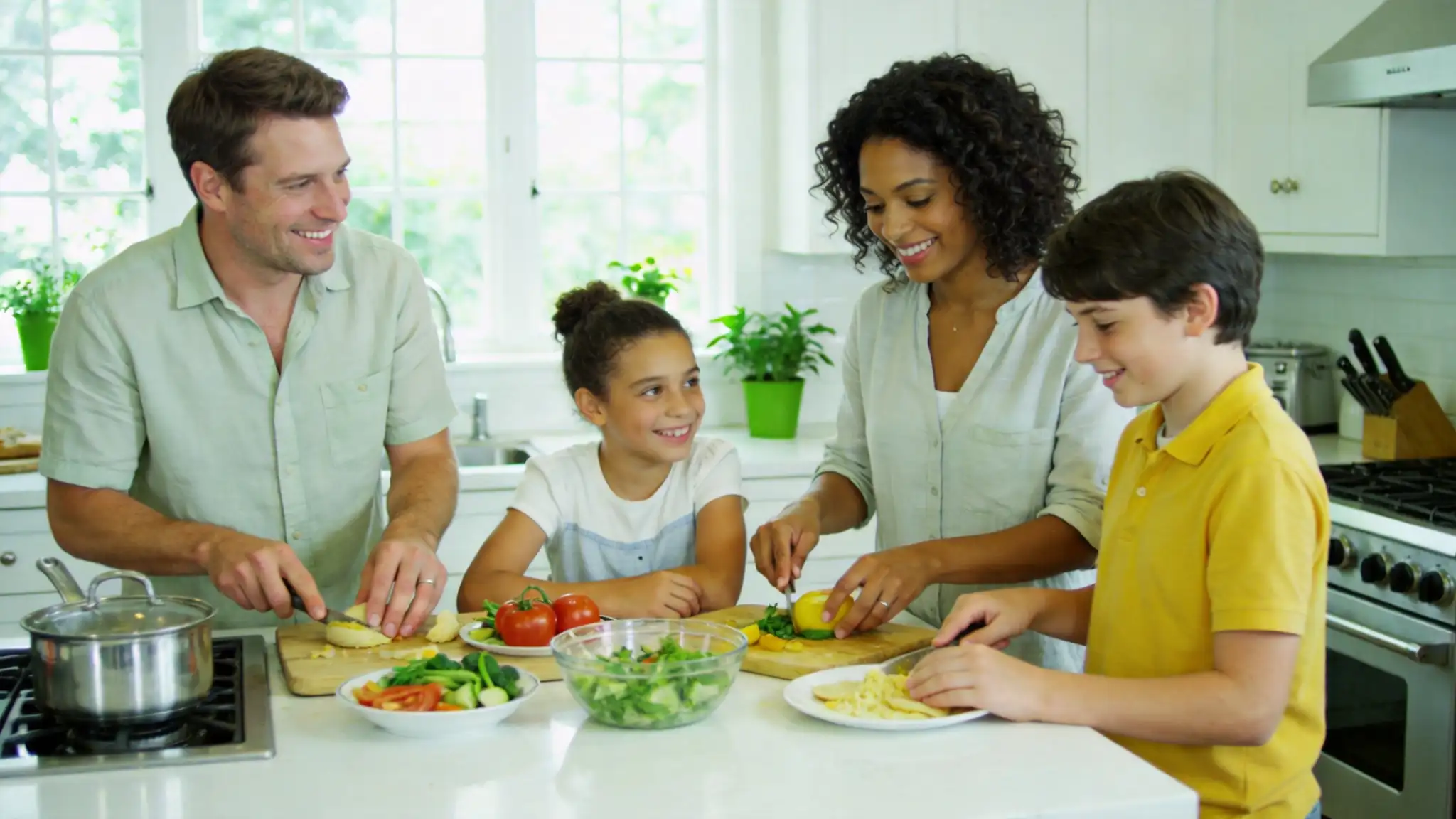
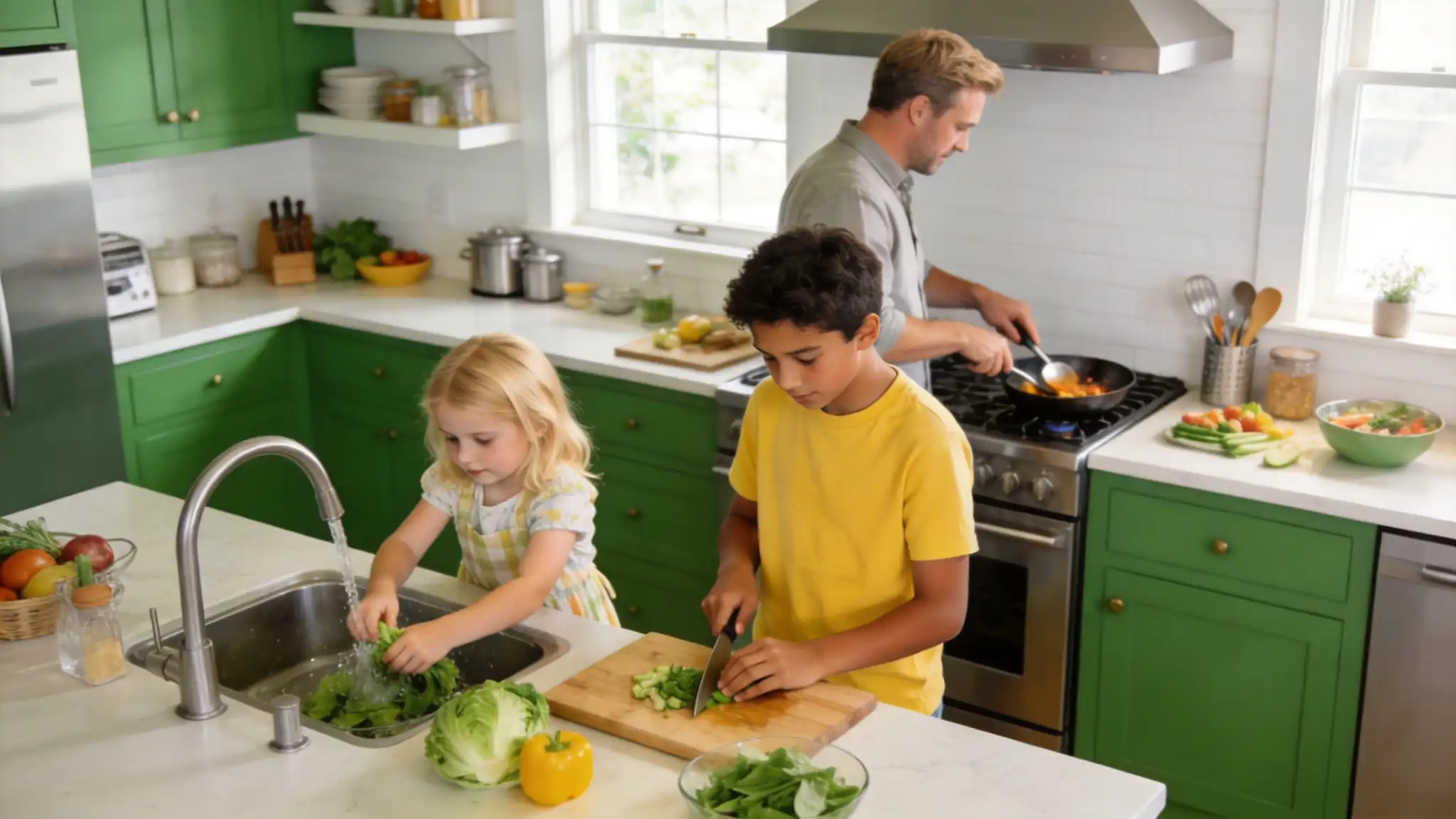
Picture this: it is Sunday evening. The kitchen smells of garlic and herbs. Your 7-year-old is tearing lettuce for a salad while your teenager sautés vegetables at the stove. Laughter mixes with the sizzle of the pan. This is not a fantasy—it is what family cooking collaboration looks like when you have the right system.
In 2026, busy schedules, screen time battles, and fragmented mealtimes have made family cooking feel like an impossible goal for many American households. Yet research consistently shows that cooking and eating together as a family is one of the highest-impact activities you can do for your children's health, academic success, and emotional wellbeing. This guide gives you a practical, age-based framework to transform your kitchen from a source of stress into a family collaboration hub.
Why Family Cooking Matters: The Data Behind the Dinner Table
Before we dive into tactics, let us look at why this matters. The evidence is overwhelming.
Better Nutrition and Health Outcomes
Children who regularly participate in family meals consume more fruits, vegetables, and whole grains while eating fewer fried foods and sugary drinks. According to the American Academy of Pediatrics, family dinners are strongly associated with improved dietary quality in children and adolescents. A comprehensive review published through PubMed and NIH-funded research found that shared family meals were linked to lower childhood obesity rates and better cardiovascular health markers.
When kids help cook the food, the effect amplifies. Children who participate in meal preparation show increased willingness to try new foods, including vegetables they would normally refuse. The CDC's childhood nutrition guidelines emphasize that hands-on food experiences are foundational for building lifelong healthy eating patterns.
Academic and Cognitive Benefits
Cooking is a stealth learning activity. Measuring ingredients teaches fractions and ratios. Following recipes builds reading comprehension and sequencing skills. Timing multiple dishes develops executive function and planning abilities. Research indexed in NIH research databases has found that regular cooking activities in childhood correlate with stronger math performance and problem-solving skills years later.
Teenagers who cook regularly also develop time management skills that transfer directly to academic work. Planning a meal that comes together at the same time requires the same project-coordination skills as managing homework deadlines and group assignments.
Mental Health and Social Development
The mental health benefits are equally significant. The U.S. Department of Health and Human Services has highlighted family mealtime as a protective factor against depression, anxiety, and risky behaviors in adolescents. Studies consistently show that teens who share frequent family meals have lower rates of substance abuse, better stress management, and stronger family attachment.
Cooking together adds another layer. It creates natural opportunities for conversation, collaborative problem-solving, and shared accomplishment. When a child successfully makes their first omelet or bakes a cake that the whole family enjoys, the confidence boost extends far beyond the kitchen.
Age-Appropriate Kitchen Tasks: The Complete Guide
The most common mistake parents make is either expecting too much (giving a 5-year-old a sharp chef's knife) or too little (asking a 12-year-old to just watch). The key is matching tasks to developmental abilities while keeping safety front and center.
Ages 3–5: The Foundation Builders
Toddlers and preschoolers are eager helpers. Their tasks should focus on sensory exploration and simple motor skills:
Washing produce: Let them scrub potatoes or rinse lettuce in a colander. Use a sturdy step stool for safe sink access.
Tearing and snapping: Tear lettuce for salads, snap green beans, or break broccoli into florets. These actions build fine motor control.
Stirring and mixing: Mixing batter in a large bowl or stirring dressings in a mason jar. Use bigger bowls than necessary to reduce spills.
Measuring and pouring: Scoop pre-measured ingredients into bowls. This introduces counting and volume concepts.
Pressing buttons: Start the blender, timer, or microwave (with supervision). Kids love having "control" over technology.
Safety tip: Keep hot surfaces, sharp objects, and heavy pots completely off-limits. Use plastic or silicone utensils exclusively. Their job is participation, not independence.
Ages 6–9: The Skill Builders
School-age children have better coordination and longer attention spans. This is the age where real skills begin:
Kid-safe knife skills: Use a plastic serrated knife or a beginner's chef knife with a rounded tip to cut soft foods—bananas, strawberries, cooked potatoes, cheese.
Cracking eggs: A classic milestone. Teach them to crack into a separate bowl first so shell fragments can be removed.
Reading recipes: Have them read the next step aloud. This builds confidence and keeps them engaged.
Setting the table: A consistent pre-dinner responsibility that teaches organization and contributes to the family routine.
Simple stovetop tasks: Stirring scrambled eggs, flipping pancakes, or heating soup in a saucepan—always with an adult immediately present.
Parent strategy: At this age, praise effort over outcome. An unevenly chopped cucumber is still chopped. Focus on building their willingness to try.
Ages 10–12: The Competent Cooks
Preteens can handle genuine cooking responsibilities with supervision:
Independent knife work: Teach proper grip and claw hand technique. Let them chop most vegetables and fruits.
Stovetop cooking: Sautéing vegetables, boiling pasta, making grilled cheese, cooking simple stir-fries.
Oven use: Baking cookies, roasting vegetables, making casseroles. Teach them to use oven mitts and check doneness.
Recipe modification: Ask them to double a recipe, substitute an ingredient, or adjust seasoning to taste.
Meal planning input: Let them suggest one dinner per week and help plan the grocery list for it.
Growth moment: This is the age where many children develop a genuine interest in cooking. Encourage it by letting them choose recipes from cookbooks or apps and giving them ownership of one dish per meal.
Ages 13+: The Kitchen Partners
Teenagers can function as genuine kitchen partners, capable of preparing complete meals:
Full meal preparation: Let them cook an entire dinner from start to finish once a week.
Advanced techniques: Knife skills for meat and fish, sauce-making, baking from scratch without mixes.
Budgeting and shopping: Give them a budget and have them plan a meal, create a shopping list, and shop (with or without you, depending on maturity).
Teaching younger siblings: Nothing solidifies skills like teaching someone else. Have them supervise a younger sibling's task.
Cooking for friends: Let them plan and prepare food for a small get-together. Social motivation is powerful at this age.
Conflict prevention: Teenagers resist tasks that feel like busywork. Give them genuine responsibility with real consequences—if they do not make dinner, the family does not eat. Avoid micromanagement. Let them learn from mistakes.
Building Your Family Kitchen Collaboration System
Knowing what kids can do is only half the battle. The other half is creating a sustainable system that prevents burnout, eliminates nagging, and distributes labor fairly.
The Rotating Role System
Instead of assigning the same tasks to the same people, use rotating roles that shift weekly or monthly:
Meal Planner: Chooses the week's recipes, checks what ingredients are on hand, and submits requests. This person gets real decision-making power.
Grocery Lead: Manages the shopping list, checks store apps for deals, and either shops or coordinates delivery.
Prep Captain: Arrives in the kitchen 30 minutes before dinner to wash, chop, and measure everything needed.
Head Chef: The primary cook for that meal. Other family members assist, but this person directs the workflow.
Cleanup Crew: Handles dishes, wipes counters, and restores order after the meal.
Critical rule: The same person should never be stuck with cleanup every night. Rotate roles fairly, and consider letting the Head Chef choose their own assistant so power dynamics stay balanced.
The Weekly Family Cooking Meeting
Spend 15 minutes every Sunday planning the week. Each person shares one meal they want to eat. The Meal Planner records it. The Grocery Lead builds the list. Everyone knows the schedule. This eliminates the daily "what's for dinner" stress and gives kids ownership of family meals.
Creating a Kid-Friendly Kitchen Environment
Small environmental changes make a huge difference:
Lowered workspace: A pull-out step drawer or adjustable-height counter lets younger children work comfortably without hunching.
Accessible tools: Keep kid-safe knives, measuring cups, and mixing bowls in a low drawer they can reach independently.
Visual schedules: A whiteboard or chalkboard with the week's menu and assigned roles eliminates confusion.
Music and atmosphere: A kitchen speaker with a family playlist makes cooking feel social rather than chore-like.
When Kids Refuse to Participate: Proven Strategies
Even with the best system, resistance happens. Here is how to handle it without turning cooking into a battleground.
For Younger Children (Ages 3–9)
Make it a game: Time them on simple tasks. Challenge them to tear lettuce into exactly 20 pieces. Gamification works.
Offer a choice, not a command: "Do you want to wash the tomatoes or stir the sauce?" Both options lead to participation, but the illusion of choice reduces resistance.
Connect to the outcome: "If we do not make the sauce, the pasta will be plain. Your sauce is what makes this good."
Use the buddy system: Pair a reluctant child with an enthusiastic sibling or parent. Peer energy is contagious.
For Older Children and Teenagers (Ages 10–17)
Respect their time: If they have homework or sports, do not force cooking on their busiest days. Build the schedule around their real lives.
Let them choose the recipe: Ownership eliminates resistance. If they pick a TikTok recipe for spicy ramen, make it—even if it is not what you would choose.
Connect cooking to skills they value: Teenagers who want independence can learn to cook their own meals. Socially-minded teens can make food for friends. Future-focused teens can learn budgeting through meal planning.
Do not demand perfection: If they make a mediocre meal, eat it without criticism. The goal is participation, not culinary school readiness.
Negotiate, do not dictate: "You cook one night, and I will handle your least favorite chore this week." Fair exchange builds cooperation.
When to Let It Go
Not every child will love cooking, and that is okay. The goal is regular participation, not universal enthusiasm. A child who helps for 10 minutes twice a week is still gaining benefits. Focus on consistency over intensity. If a particular session becomes a fight, it is better to cook without them that night than to create a negative association that lasts for months.
Weekend Family Cooking Activities That Build Skills and Memories
Weekends are your opportunity to go beyond routine dinner prep and turn cooking into a genuine family experience. Here are activities that work across age groups:
1. DIY Pizza Night
Make dough from scratch (or buy premade for younger families). Set out sauces, cheeses, and toppings. Each family member designs their own pizza. Younger kids spread sauce and place toppings. Older kids stretch dough and manage oven timing. The meal is inherently social because everyone is invested in their own creation.
2. International Cuisine Exploration
Pick a country each month. Research its food culture together. Shop for authentic ingredients. Cook a full meal from that cuisine. This builds cultural awareness while teaching diverse cooking techniques. A 10-year-old who learns to roll sushi or fold dumplings is learning skills that transfer to many other recipes.
3. Farmers Market Treasure Hunt
Give each family member $5 and challenge them to find an ingredient they have never cooked with. Come home and figure out how to use everything together. This builds adaptability, reduces food waste, and teaches seasonal eating.
4. Baking Challenges
Choose a category—cupcakes, cookies, bread—and let each family member make their own version. Taste-test and vote. This is especially effective with teenagers because it introduces friendly competition and creative freedom.
5. Meal Prep Sundays
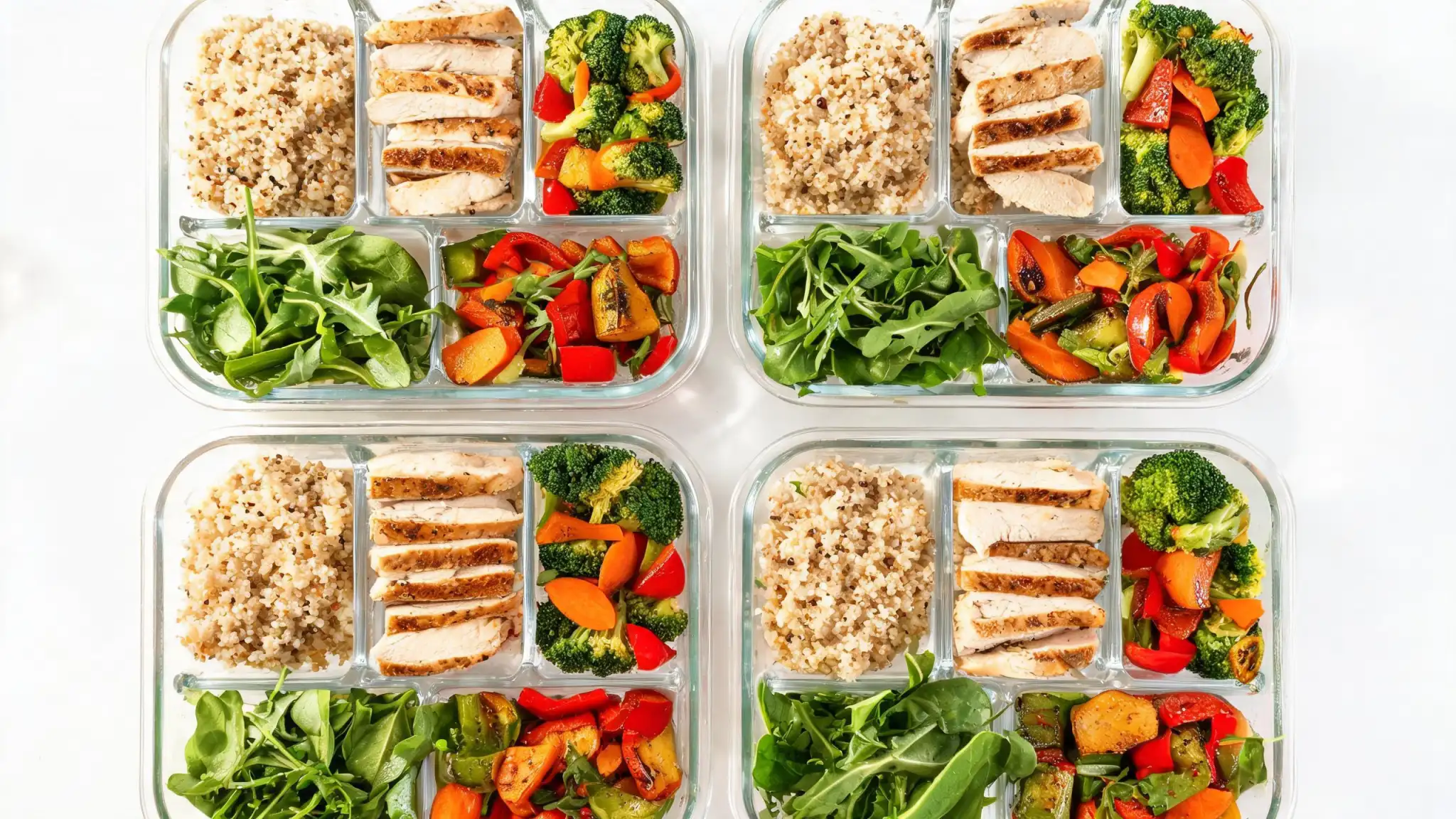
Turn Sunday afternoon into a family production line. One person cooks grains, another roasts vegetables, a third prepares proteins. Container everything for the week. This teaches efficiency, batch cooking, and teamwork while saving hours during the busy workweek.
How CookGo AI Simplifies Family Meal Planning
Even with the best intentions, family cooking collaboration falls apart when planning becomes overwhelming. Deciding what to cook, ensuring balanced nutrition, building shopping lists, and scaling recipes for your family size takes mental energy that many parents do not have after a full workday.
This is where CookGo transforms the experience. Our AI-powered meal planning platform is designed specifically to support family cooking collaboration in 2026:
Personalized Family Meal Plans
CookGo generates weekly menus that account for each family member's preferences, dietary restrictions, and nutritional needs. If your 6-year-old hates mushrooms but your teenager loves them, CookGo balances both without forcing separate meals. The AI learns your family's patterns and gets smarter with every week.
Auto-Organized Shopping Lists
Once the meal plan is set, CookGo automatically generates a shopping list sorted by store section—produce, dairy, pantry, frozen. No more wandering the aisles with a disorganized paper list. Send the list directly to your phone or share it with your grocery delivery app.
Kid-Friendly Task Suggestions
CookGo flags recipes with built-in opportunities for child participation. When you browse recipes, you will see tags indicating which age group can help with which steps. A recipe might show "Ages 6–9: wash and tear lettuce" and "Ages 10+: sauté chicken with supervision." This makes it effortless to integrate your kids into the cooking process.
Multi-Device Cooking Mode
Send step-by-step instructions to multiple devices simultaneously. Dad follows the main recipe on the tablet while your 12-year-old gets the side dish instructions on their phone. Everyone works in parallel instead of crowding around a single cookbook.
Automatic Portion Scaling
Whether you are cooking for four people or hosting a family reunion for sixteen, CookGo instantly adjusts ingredient quantities. No more mental math or ruined recipes from incorrect scaling.
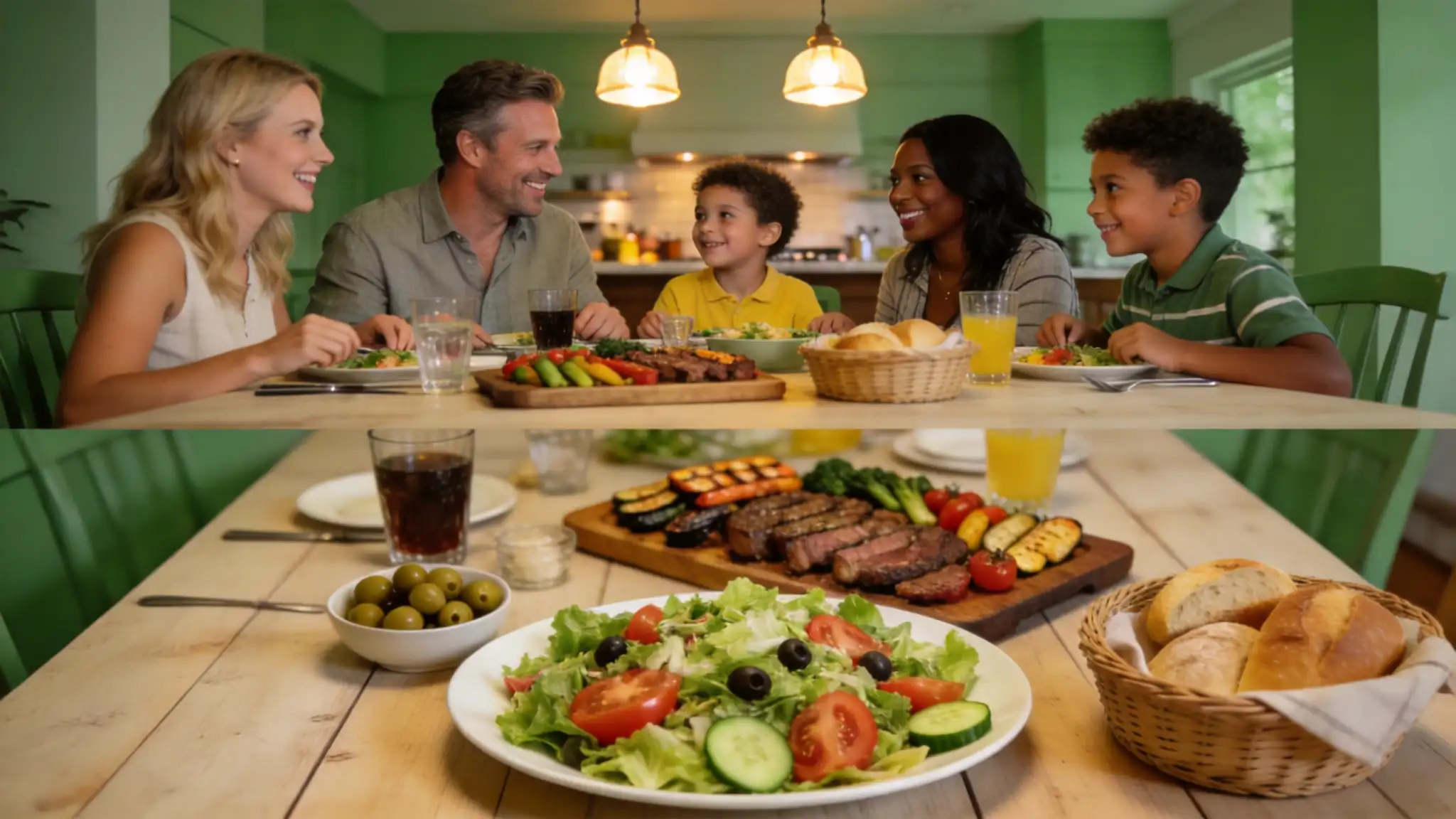
Family cooking collaboration does not have to be chaotic. With the right system, the right expectations, and the right tools, your kitchen can become the heart of your home—where skills are built, bonds are strengthened, and meals are genuinely shared.
Ready to transform your family's cooking routine? Explore CookGo and discover how AI-assisted meal planning can give you back the time and energy to focus on what matters most: cooking together.