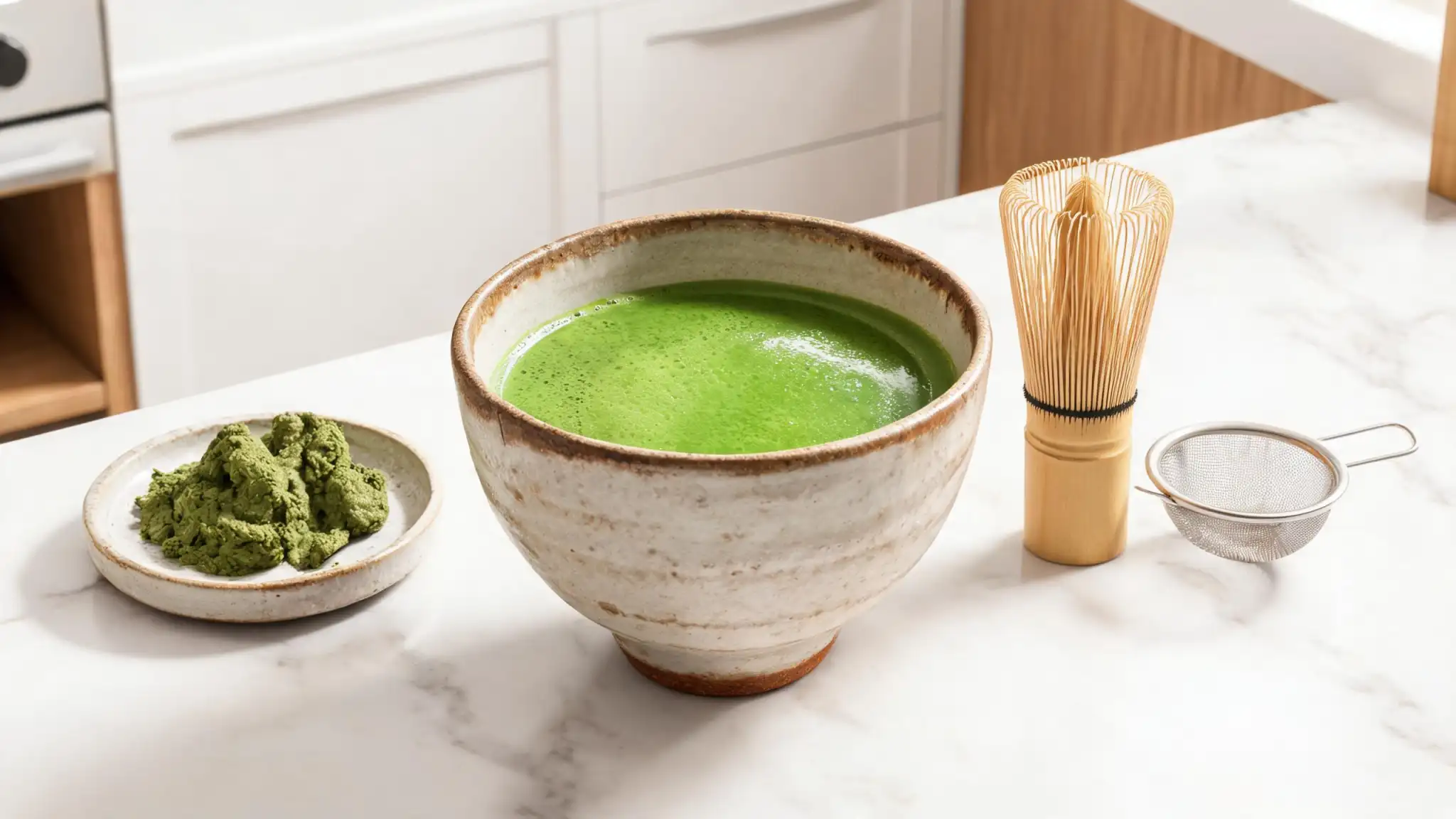
By the CookGo Editorial Team | Tested in our home kitchen over 200+ bowls of matcha
You scoop bright green powder into your mug, add hot water, stir with a spoon, and end up staring at a cup of sad, grainy lumps. If you've ever asked yourself "why is my matcha clumpy?" — you're in very good company. After testing matcha preparation almost daily for over a year (and ruining more than a few bowls so you don't have to), I can tell you this: clumpy matcha is almost never a bad product. It's almost always a fixable technique problem.
In this guide, I'll walk you through the real science of why matcha clumps, the exact 4-step method that gives me café-smooth matcha every single morning, the powder-to-water ratios professionals actually use, and five ways to make perfect matcha even if you don't own a bamboo whisk. By the end, you'll know exactly what went wrong with your last lumpy cup — and how to never repeat it. Let's fix your matcha for good.
Why Is Your Matcha Clumpy? The Science Behind the Lumps
Here's the first thing to understand: matcha does not dissolve. Unlike instant coffee or powdered drink mixes, matcha is made from whole tea leaves ground into particles between 5 and 10 microns — fine, but not molecularly fine. When you add water, matcha forms a suspension, not a solution. Those tiny leaf particles are suspended in the water, and if they find each other before they find moisture, they grab on. That clinging is what we call a clump. You can read more about how matcha is produced from shade-grown tea leaves — the same whole-leaf origin is exactly why it behaves so differently from instant powders.
In my testing, clumping comes down to three culprits:
1. Static electricity. Matcha particles are so light that they build up static in the tin and cling together into stubborn little balls the moment they hit water. Dry powder + dry air = instant clumps.
2. Humidity. If your matcha has absorbed moisture from the air, the outer layer of each particle gets slightly damp and sticky. Instead of dispersing, particles fuse together — this is the "rock-hard clump at the bottom of the cup" scenario.
3. Pouring water straight onto dry powder. When water lands on a pile of matcha, the outer particles hydrate instantly and form a waterproof skin around a dry core. That skin is why your spoon can push a clump around the cup forever without breaking it.
Every fix in this guide attacks one of these three causes. Keep them in mind and you'll never be confused by a lumpy cup again.
The 4-Step No-Fail Method for Smooth, Lump-Free Matcha
This is the exact routine I use every morning. It takes about 90 seconds once it becomes habit, and it has eliminated clumps from my matcha completely — yes, even with budget culinary-grade powder.
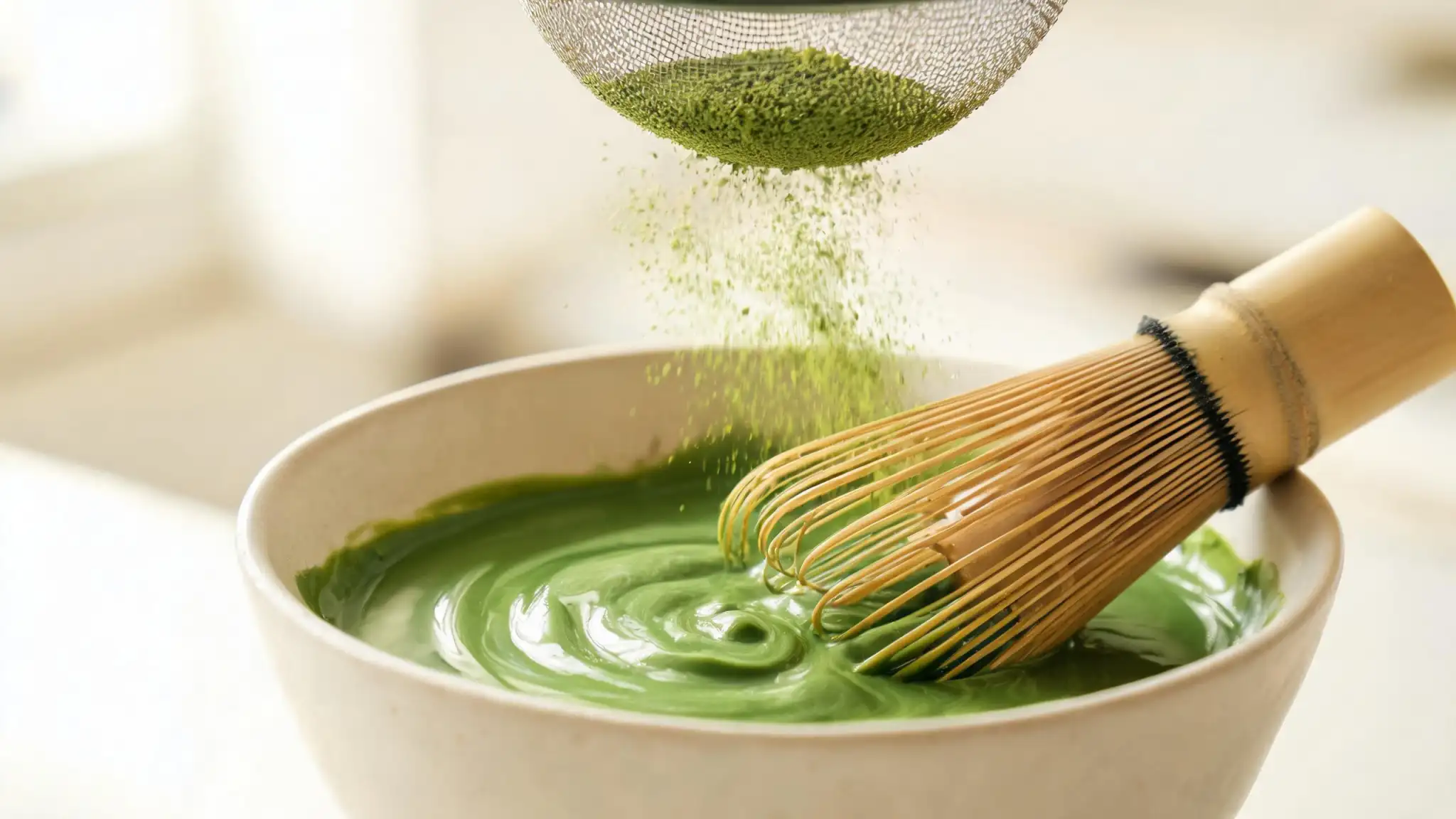
Step 1: Sift the matcha (10 seconds, non-negotiable)
Push your matcha through a fine-mesh tea strainer or small sieve directly into the bowl. Sifting breaks up static clumps before water ever touches the powder. No sieve? Use a fork to crush the powder against the side of the bowl. This single step is the fix most people skip — and the one that makes the biggest difference.
Step 2: Make a paste with a small splash of water
Add only about 1 tablespoon (15 ml) of water to the sifted powder. Use your whisk, frother, or fork to work it into a thick, glossy paste with no dry spots. This is the classic Japanese paste method (sometimes called the slurry method), and it's the secret weapon against clumps: every particle gets individually coated in water, so no dry core can hide inside a clump.
Step 3: Add the rest of the water at the right temperature
Now pour in your remaining water at 70–80°C (158–176°F) for drinking matcha. No thermometer? Boil the water, then let it sit uncovered for about 5–7 minutes, or pour it between two cups once to drop the temperature. We'll cover exactly why hot-but-not-boiling water matters for bitterness in a later section.
Step 4: Whisk in a "W" or "M" motion — not circles
Rapid back-and-forth strokes from the wrist (imagine drawing a series of W's) whip air into the tea and break up any remaining micro-clumps. Circle stirring just pushes clumps around. 15–20 seconds is plenty. You're aiming for a fine, even foam with tiny bubbles on the surface — big soap-like bubbles usually mean over-whisking.
Matcha Water to Powder Ratio: The Cheat Sheet
One of the most common follow-up questions I get: "how much matcha per cup, exactly?" Eyeballing it is how most people end up with either weak green water or bitter sludge. Matcha is concentrated stuff — a standard serving has roughly the caffeine of half a cup of coffee, and you can verify the nutrition profile yourself on the USDA FoodData Central database. Here's the ratio table I keep taped inside my kitchen cabinet:
Style | Matcha | Water | Water temp | Best for |
|---|---|---|---|---|
Usucha (thin tea) | 2 g (1 level tsp) | 70 ml (2.4 oz) | 70–80°C | Daily drinking, straight |
Koicha (thick tea) | 4 g (2 level tsp) | 40 ml (1.4 oz) | 70–80°C | Special occasions, strong flavor |
Matcha latte | 2–3 g (1–1.5 tsp) | 60 ml water + 120–180 ml milk | 70–80°C (both) | Lattes, iced matcha |
A few notes from real-world testing: a kitchen scale beats a teaspoon (matcha powder compacts), but if you're using spoons, sift first, then scoop gently without pressing. And for iced matcha, make the paste with a little warm water first — cold water alone almost guarantees clumps.
How to Whisk Matcha Without a Whisk: 5 Substitutes, Ranked
The traditional bamboo whisk (chasen) is wonderful, but you don't need one to make great matcha. I've tested every household substitute across dozens of bowls. Here's my honest ranking, from best to "works in a pinch":
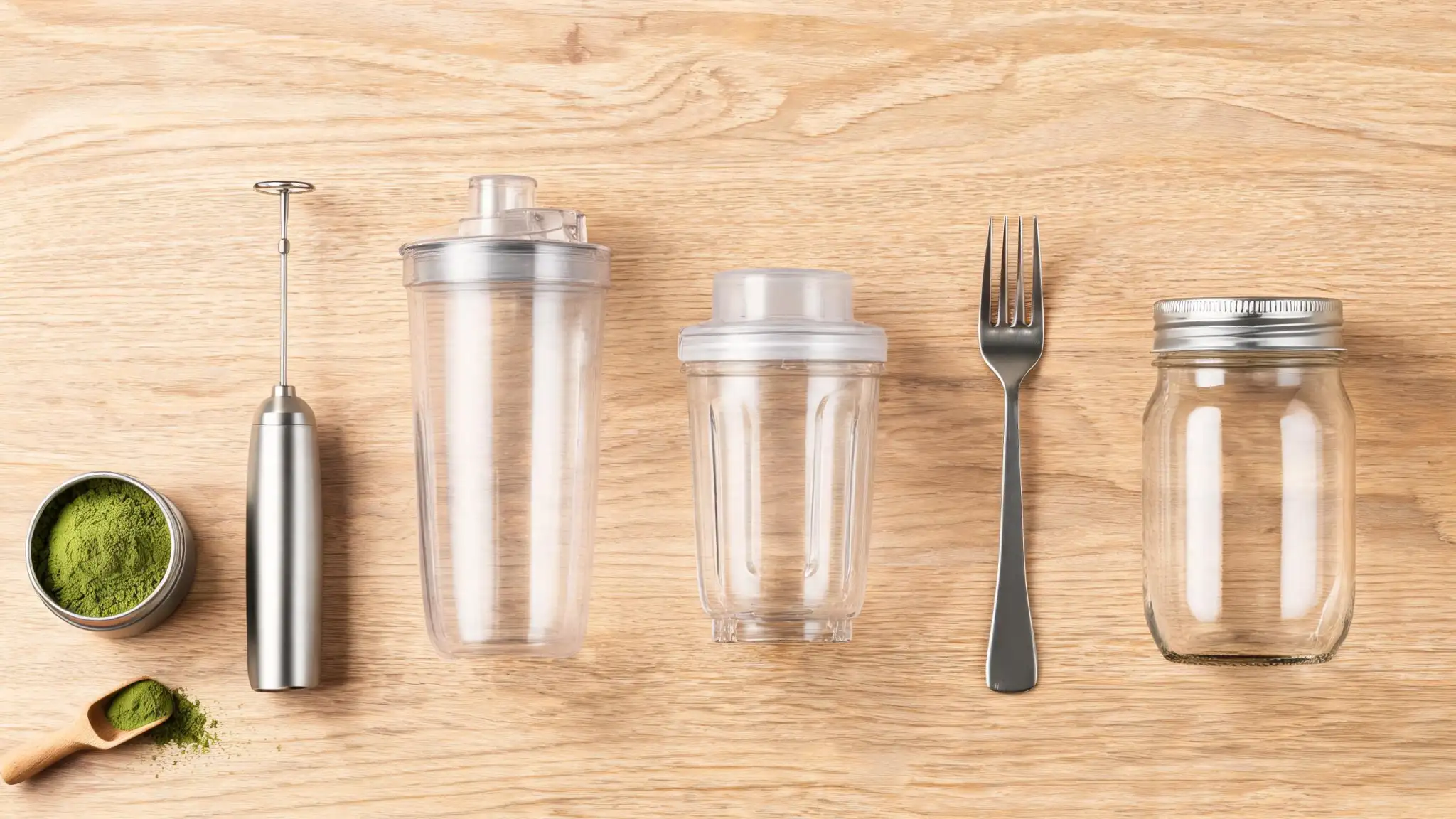
Electric milk frother — the clear winner. Ten seconds of frother action after making your paste produces genuinely café-level smoothness with micro-foam. This is what I use for lattes 90% of the time. The only downside: it can't quite reach the bottom corners of a wide bowl.
Sealed shaker bottle or mason jar. Make the paste with a splash of warm water first, add the rest, seal tightly, and shake hard for 20 seconds. Outstanding for iced matcha. Just open the lid slowly — pressure builds up.
Small blender or hand blender. Blitz the paste + water for 10 seconds and you get perfectly dispersed matcha. Slightly more cleanup, and over-blending hot liquid can taste "cooked," but results are very consistent.
Fork + paste method. If you followed the paste method in Step 2 above, a fork works surprisingly well — press and swirl against the bowl wall to work out lumps, then whisk briskly. Grittier finish than the top three, but completely acceptable.
Regular spoon — last resort. A spoon alone is the worst tool: it pushes particles around without shearing clumps apart. If a spoon is all you have, be extra strict about sifting and the paste method, and expect some texture.
My honest verdict: spend $10–15 on a handheld milk frother before you'd spend $30 on a chasen. For everyday lattes, the frother wins on speed, cleanup, and consistency.
Why Is My Matcha Bitter or Gritty?
Clumping and bitterness share the same root causes, which is why they so often show up together. In my experience, bitter matcha comes down to three things:
Boiling water. Water at a full rolling boil (100°C/212°F) scorches the delicate amino acids in matcha and extracts extra bitterness. Drop it to 70–80°C and you'll taste the difference immediately — sweeter, smoother, almost no bitterness without adding a thing.
Low-grade or stale matcha. Culinary-grade matcha is blended for baking and tends to be more astringent; it's also more prone to grittiness because the grind can be coarser. Fresh, vibrant, jade-green ceremonial-grade powder tastes dramatically smoother.
Too much powder, too little water. Over-concentrated matcha amplifies every bitter note. Go back to the ratio table above — 2 grams per cup is the sweet spot for most people.
And if you're drinking matcha partly for wellness, it's worth knowing that green tea's key compounds — catechins like EGCG and the calming amino acid L-theanine — are among the most studied in nutrition science; the NIH's National Center for Complementary and Integrative Health has a balanced, evidence-based overview of green tea's benefits and limits. Preparing it gently (cooler water, no boiling) helps preserve those compounds, too.
How to Store Matcha Powder So It Never Clumps
Remember cause #2 of clumping: humidity. Storage is clump prevention. Here's what actually works, based on years of keeping matcha in a normal (not perfectly climate-controlled) kitchen:
Airtight, opaque, and small. Oxygen, light, and moisture are matcha's three enemies. Use the smallest airtight container that fits your powder — less air inside means less oxidation. Tinted or opaque tins beat clear jars.
Refrigerate, but do it right. The fridge helps in humid climates, but condensation is the danger. Seal the container tightly, and never open it straight out of the fridge — let it come to room temperature first so moisture doesn't rush onto the cold powder. This is the mistake that causes those rock-hard humidity clumps.
Freezer for long-term, not daily use. Freezing pauses oxidation almost completely and is great for backup tins. But for the tin you use daily, room temperature in a dark cabinet works fine if it's airtight — constant temperature swings cause more condensation than a stable cupboard.
Buy sizes you'll finish. Matcha is at its best within 4–8 weeks of opening. A 30 g tin beats a 100 g bag you'll still be working through three months later.
FAQ: Your Matcha Questions, Answered
Why is my matcha clumpy even after whisking?
Almost always because the powder wasn't sifted, or water was poured straight onto dry powder. Dry cores inside clumps are waterproof — whisking can't break them. Go back to the 4-step method: sift first, make a paste with a tablespoon of water, then add the rest. This fixes it 95% of the time.
Does matcha dissolve in water?
No — and this is the single most important mindset shift. Matcha is ground whole tea leaf, so it forms a suspension, not a solution. The particles never disappear; they just need to be dispersed finely and evenly. That's why technique (sifting, paste, whisking) matters more than stirring time. Give it a minute and some sediment at the bottom of the cup is completely normal.
How much matcha powder per cup of water?
For standard thin tea (usucha), use 2 g — about 1 level teaspoon — per 70 ml (2.4 oz) of water. For a latte, 2–3 g of matcha with about 60 ml of water, topped with 120–180 ml of milk. The full three-tier ratio table is in the section above.
Can you make matcha without a whisk?
Yes. An electric milk frother is the best substitute, followed by a sealed shaker bottle (perfect for iced matcha), a small blender, and a fork used with the paste method. A spoon alone is the weakest option. See the ranked list with my test results above.
Why is my matcha bitter?
The top cause is water that's too hot — above roughly 80°C (176°F), matcha turns harsh and astringent. Let boiled water cool 5–7 minutes before pouring. Bitterness can also come from low-grade or stale powder, or simply using too much matcha for the amount of water.
Why is my matcha gritty?
Grittiness usually means the grind is coarse (common in cheaper or older culinary-grade powder), the powder wasn't sifted, or your water is very hard. Sift every time, use the paste method, and if your tap water is hard, try filtered water — you'll taste and feel the difference.
Should I refrigerate or freeze matcha powder?
Both work if — and only if — the container is truly airtight and you let it warm to room temperature before opening, so condensation can't form on the powder. For a tin you use daily, a dark cabinet at room temperature with a tight seal is honestly simpler and completely fine.
The Bottom Line: Smooth Matcha Is a Method, Not Luck
Clumpy matcha comes from static, humidity, and dry powder meeting water too fast — and every one of those has a simple fix. Sift, make a paste, use 70–80°C water, whisk in a W-motion, respect the ratio, and store your powder airtight. Do those six things and you'll drink café-smooth matcha every single time, no $30 whisk required.
And once your matcha is smooth? That's where the fun starts. CookGo is where I turn my morning matcha into everything from iced lattes to baked desserts — you can snap a photo of any recipe or type an idea, and it builds the full recipe with ingredients, steps, and nutrition instantly. It's free to start.
Visit the CookGo website to get started, or download the app: CookGo on the App Store · CookGo on Google Play.